How to Get Your Content Cited by ChatGPT and Perplexity
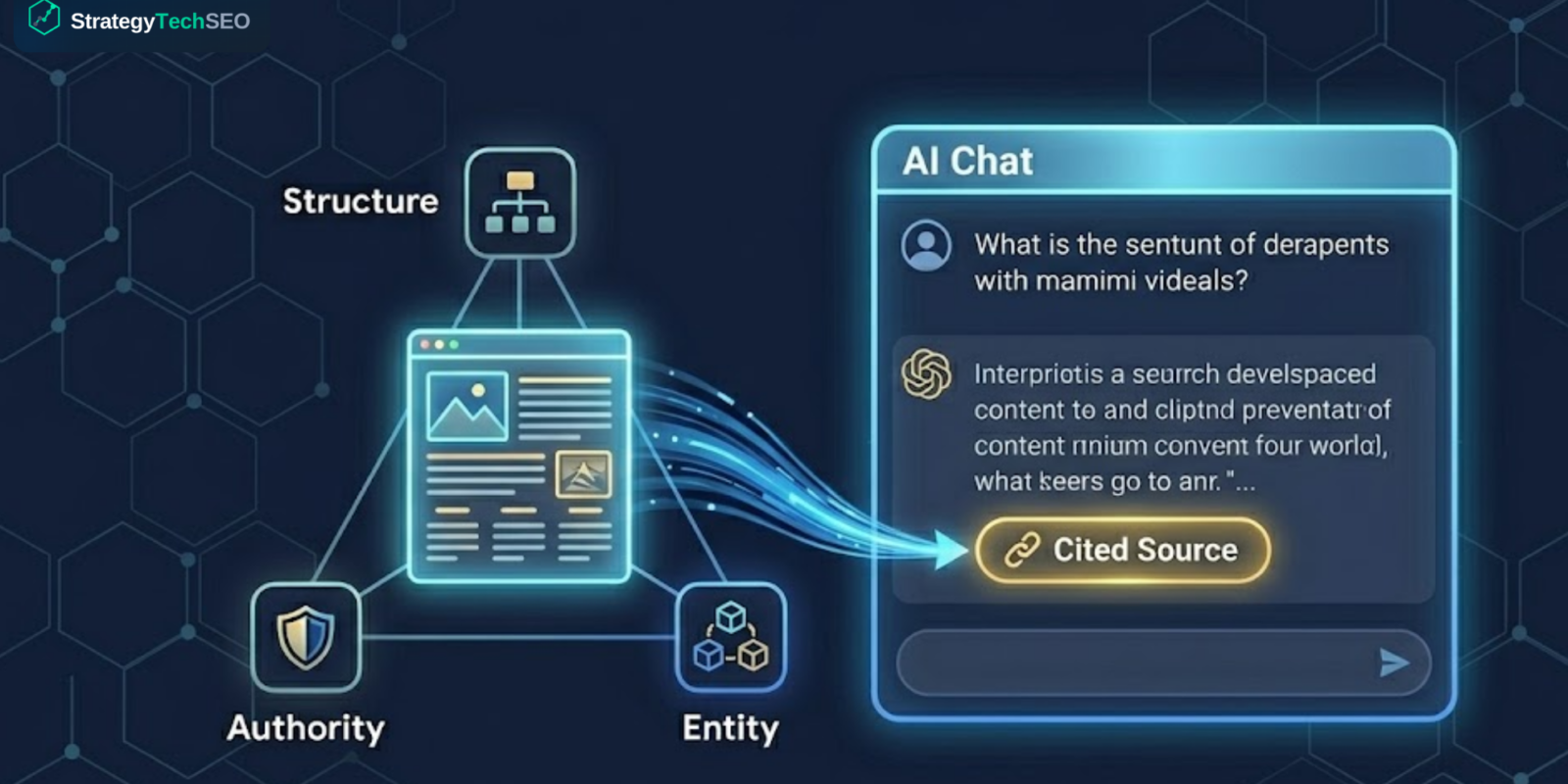
If you want to learn how to get cited by ChatGPT, you need to understand what makes content citable in the first place. Large language models do not cite pages because they rank well on Google. They cite pages because the content is structured for extraction, backed by recognizable authority signals, and attached to entities that AI systems can confidently identify. Those are the three levers that determine whether your content shows up as a cited source in AI generated responses or gets passed over entirely.
The shift from traditional search to AI-powered answer engines has changed how visibility works. ChatGPT Perplexity and Google AI Overviews now synthesize answers from multiple sources and present them directly to users. Your content either becomes part of that answer or it does not exist in the conversation. This guide breaks down exactly what you need to do to land on the right side of that equation.
Why AI Citation Is the New Visibility Metric
Traditional SEO taught marketers to optimize for rankings and click-through rates. Those metrics still matter. But they no longer capture the full picture of how your audience finds information. A growing share of users now ask questions directly to large language models, and the answers those models deliver include citations that link back to the sources they pulled from.
This is where AI citation becomes the metric that matters. When ChatGPT or Perplexity cites your page, you earn direct referral traffic from an audience that has already received a synthesized answer and wants to go deeper. Research shows that AI-referred visitors convert at 4.4 times the rate of standard organic traffic. That conversion premium exists because the traffic cited has higher intent. The user has already decided your source is worth visiting.
The brands that understand how AI measures citation worthiness are capturing traffic and authority that their competitors are leaving on the table.
Lever 1: Content Structure That AI Can Extract
The most important factor in earning AI citations is the structure of your content. Large language models do not read your page top to bottom and decide whether to cite it. They scan for passages that directly answer specific questions, then extract them into their responses.
This means every section of your page needs to function as an independent, extractable unit. Here is what that looks like in practice.
Lead with Direct Answers
The first one to two sentences of every section should deliver a clear, definitive statement that answers the question implied by the heading. AI models prioritize these opening statements when selecting passages to cite. If your answer is buried in paragraph three, no answer engine will find it.
Use Descriptive Headings
Your H2 and H3 tags should mirror the natural language queries your audience uses. When a user asks ChatGPT a question, the model looks for headings that match that query structure. Vague headings like “Overview” or “Background” give AI nothing to work with.
Keep Sections 120 to 180 Words
Research indicates that pages organized into sections of this length receive significantly more ChatGPT citations than pages with shorter, fragmented sections or long, unbroken blocks of text.
Add Structured Data
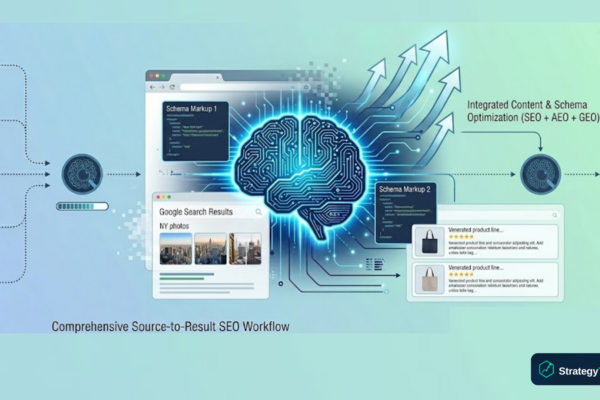
Schema.org markup (Article, FAQ, HowTo, and Organization schema) makes your content machine-readable. Structured data helps AI models parse your page architecture and identify which passages correspond to which topics. This is not optional for AI visibility. It is a core technical requirement.
Content with specific metrics, concrete data points, and attributed statistics earns more citations because large language models are designed to provide evidence-based responses. When AI systems encounter verifiable claims, they preferentially cite those sources as a primary source of information.
Lever 2: Authority Signals That AI Systems Trust
Content structure gets your page noticed. Authority signals determine whether AI systems trust it enough to cite. The authority model for AI citation overlaps with traditional SEO but adds several dimensions that most marketers overlook.
| Authority Signal | What It Means for AI Citation |
|---|---|
| Domain Authority & Referring Domains | Sites with strong backlink profiles and high counts of referring domains see higher citation rates. Traditional SEO link building directly supports AI visibility. |
| Brand Search Volume | The strongest single predictor of AI citation frequency. When users actively search for your brand, AI models interpret that as a trust signal. |
| Content Freshness | Content updated within the last 30 days receives significantly higher citation rates across both ChatGPT Perplexity and Google AI Overviews. |
| E-E-A-T Signals | Author bios with credentials, editorial review processes, transparent sourcing, and clear attribution all contribute to the trust profile that AI models evaluate. |
A page with no identifiable author, no sources, and no editorial transparency sends signals that actively discourage citation. Building brand awareness through PR, thought leadership, and audience engagement directly improves your chances of becoming a cited source.
Lever 3: Entity Consistency Across Platforms
The third lever is the one most marketers miss entirely. Large language models process entities: recognized concepts, brands, people, and products with understood relationships. When your brand entity is consistent and well-defined across the web, AI systems can confidently identify you as a cited source. When your entity data is inconsistent, AI confidence drops, and citations go to competitors with cleaner entity profiles.
- Match your brand information everywhere. Your company name, description, services, and key facts need to be identical across your website, Google Business Profile, LinkedIn, industry directories, and press mentions. Contradictions erode AI confidence. Brands have lost citations because their website described their services one way, and their Crunchbase profile described them differently.
- Build your entity footprint on knowledge platforms. Wikipedia, Wikidata, and established industry directories are where AI models look to verify entity information. If your brand has no presence on these platforms, AI systems have less confidence in citing you.
- Maintain consistency across all content. The way you describe your products, services, and expertise should use consistent terminology across every page on your site and every external mention. AI models build entity graphs from the language patterns they encounter. Inconsistent language fragments your entity and reduces citation confidence.
Entity consistency is the lever that connects your content structure and authority signals into a coherent identity that AI systems can trust. Without it, even well-structured, authoritative content may be passed over because the model cannot confidently attribute it to a verified source.
How to Audit Your Current AI Citability
Before implementing changes, you need a baseline. Here is a practical audit process you can run today.
- Search your target queries on ChatGPT, Perplexity, and Google AI Overviews. Note whether your brand appears, which competitors are cited instead, and what those cited pages have in common. Pay attention to how cited content is structured. You will likely see direct answers, clear headings, and verifiable data.
- Check your entity consistency. Search your brand name on Google and review how your brand is described across your website, Google Business Profile, LinkedIn, directory listings, and any press mentions. Flag any inconsistencies in name, description, or service offerings.
- Review your content structure. Take your top 10 pages and evaluate whether each section leads with a direct answer, uses descriptive headings, includes structured data, and contains attributed statistics. Score each page and prioritize the ones with the highest search volume but the weakest structure.
- Track citation frequency over time. Set up a monthly cadence for repeating these audits. AI citation is not a one-time optimization. The brands that build systematic tracking into their workflow will have a significant data advantage as AI search continues to grow.
The Compounding Advantage of Acting Now
The marketers who reverse-engineer what makes content citable by AI and build those practices into their workflow today are not just optimizing for a new channel. They are building a compounding advantage. Every page you restructure, every entity inconsistency you fix, every authority signal you strengthen makes your entire domain more citable across every AI generated response platform.
ChatGPT Perplexity and Google AI Overviews are where your audience is going. The question is not whether to optimize for AI citation. The question is whether you will be the primary source these platforms pull from, or whether your competitors will.
Make Your Content the Source AI Cites
Getting cited by ChatGPT and Perplexity is not luck. It is structure, authority, and entity consistency working together. StrategyTech SEO helps brands build the citation-worthy content and AI visibility strategies that turn search traffic into AI-driven growth.
Sources & References
- Frase.io. “Answer Engine Optimization: Complete AEO Guide [2026].” frase.io
- Search Engine Land. “How to Get Cited by ChatGPT: The Content Traits LLMs Quote Most.” searchengineland.com
- Pixis.ai. “How to Get Cited by ChatGPT: A Complete GEO Execution Guide.” pixis.ai
- The Digital Bloom. “2025 AI Visibility Report: How LLMs Choose What Sources to Mention.” thedigitalbloom.com
- Averi.ai. “ChatGPT vs. Perplexity vs. Google AI Mode: The B2B SaaS Citation Benchmarks Report (2026).” averi.ai
- ZipTie.dev. “How to Get Cited by AI: Guide to Earning Citations from ChatGPT, Perplexity, and Google AI Overviews.” ziptie.dev
- Semai.ai. “Why Your Brand Gets Cited in Perplexity But Not ChatGPT: AEO Operational Guide.” semai.ai

StrategyTech SEO
StrategyTech SEO helps businesses grow organic visibility through technical audits, on-page optimization, and data-driven search strategies. We turn SEO from guesswork into measurable results.