Why ChatGPT Ignores My Content: 15 Reasons Your Blog Posts Are Invisible to AI
Why ChatGPT ignores my content is one of the most common questions in SEO right now. You have published dozens of blog posts. Your content covers the topic thoroughly. Your site ranks on Google for a handful of terms. But when someone asks ChatGPT a question that your content answers perfectly, your site never comes up. This is one of the most common frustrations in SEO right now, and the answer has less to do with the quality of your writing and more to do with how AI models decide what to reference in the first place.
The problem is not that your content is bad. The problem is that it is structured, formatted, or positioned in ways that make it invisible to the AI systems that power ChatGPT and similar tools. The good news is that every one of these problems is fixable. This guide walks you through the specific issues that block AI visibility and gives you a self-audit you can run on your own site today.
Why ChatGPT Cannot See Most Websites
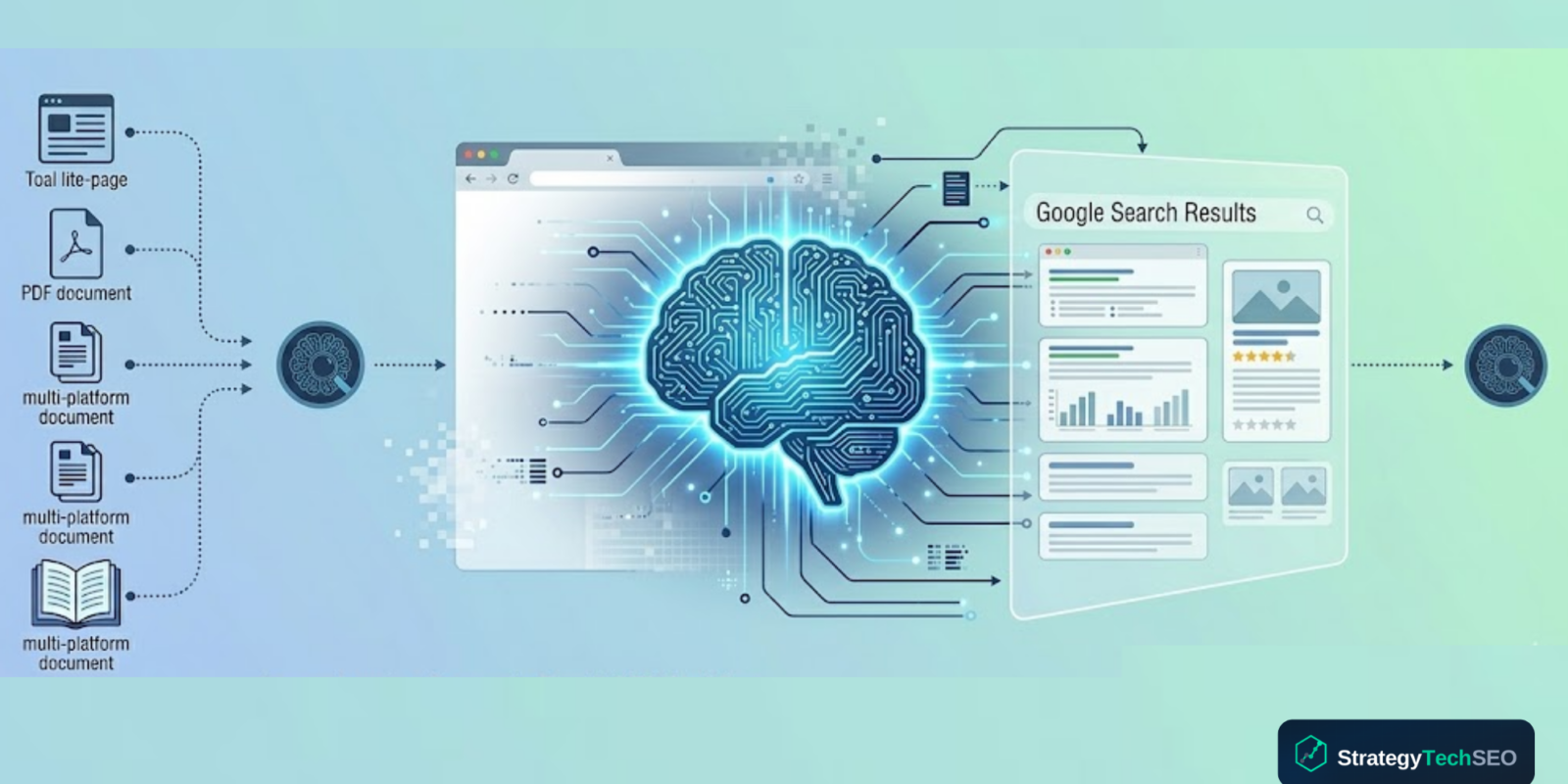
ChatGPT does not browse the internet the way Google does. It does not crawl your site in real time, index your pages, and return links. Instead, it draws from a massive training dataset built from web content, and it uses retrieval tools to pull from sources when generating responses. If your content never made it into that training data, or if your pages are structured in a way that retrieval tools cannot parse, you simply do not exist in the AI’s world.
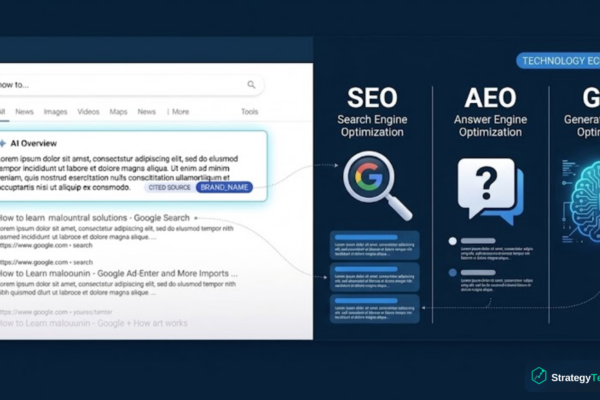
This is a fundamentally different visibility challenge than traditional SEO. With Google, you optimize for crawlers and ranking algorithms. With AI models like ChatGPT, you need to optimize for extraction. The AI needs to find a clear, direct answer on your page, understand the context around it, and trust the source enough to reference it. Most websites fail on at least two of those three requirements.
How AI Models Actually Find and Use Content
Understanding why ChatGPT ignores my content (and yours) starts with understanding how the AI system sources information. Large language models build their knowledge during training by processing billions of pages of web content. That training data includes articles, forum discussions, documentation, research papers, and published guides from across the internet. When ChatGPT generates a response, it synthesizes patterns from that data and, increasingly, retrieves real-time information from the web.
The retrieval layer is where your content is either picked up or passed over. When ChatGPT searches for supporting information, it favors pages with clear topic signals, a well-organized structure, and references from other trusted sources. Pages buried behind JavaScript rendering, thin on structured data, or missing from third-party citations rarely surface in AI responses.
| Google Search | ChatGPT / AI Tools |
|---|---|
| Crawls and indexes your pages directly | Learns from training data and retrieves in real time |
| Returns a list of ranked links | Extracts and synthesizes a single answer |
| Rewards keyword relevance and backlinks | Rewards clear structure and source authority |
| Displays your page title and meta description | May cite your site or reference your content without a link |
| Users click through to your site | Users get the answer directly in chat |
Structural Problems That Make Your Content Invisible
The most common reason AI tools skip your content is not about what you wrote. It is about how you formatted it. AI models need to extract specific answers from your page, and if your structure does not support clean extraction, the content gets ignored regardless of its depth or accuracy.
- No clear question-and-answer pattern. AI systems look for content that directly answers a specific question. If your headings are vague and your paragraphs meander before reaching the point, the AI cannot identify a usable answer block.
- JavaScript-rendered content only. If your website relies on client-side JavaScript to display content, AI crawlers and retrieval tools cannot see it. The page appears empty to any system that does not run JavaScript before parsing the HTML.
- Missing or misused heading hierarchy. When your H2s and H3s do not describe the content beneath them clearly, the AI loses its ability to map your page and locate relevant sections for a given query.
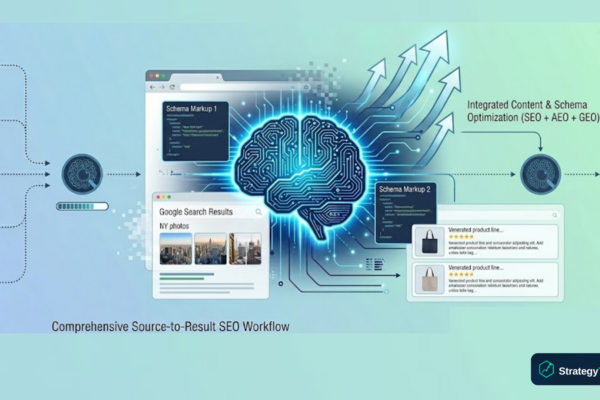
- No schema markup or structured data. Schema tells machines what your content is and how it is organized. Without it, you are asking the AI to guess. That guessing game rarely works in your favor.
- Walls of text with no scannable structure. Long paragraphs without subheadings, lists, or clear section breaks make extraction difficult. The AI needs to locate a 40-60-word answer block, but unbroken text walls make that nearly impossible.
Open any page on your site. Can you find a clear, self-contained answer to a specific question within the first two to three sentences under any heading? If not, an AI model will struggle to extract anything useful from that section.
The Authority Gap That Keeps You Out of AI Answers
Even if your content is perfectly structured, AI models may still skip it if your site lacks authority signals. Training data for systems like ChatGPT tends to lean heavily on high-authority publications, established media outlets, industry directories, and well-cited sources. If your brand is only mentioned on your own website, the AI has no external validation that your content is trustworthy.
This is the authority gap. It is the difference between a site that talks about itself and a site that other trusted sources talk about. When an AI system generates a response about a topic in your niche, it pulls from the sources that appear most frequently and most credibly across its training data. If your site has no footprint beyond its own domain, it functionally does not exist in the AI’s knowledge base.
The fix requires building real authority outside your own website. That means earning mentions in industry publications, contributing to forums and communities where your expertise adds value, getting listed in relevant directories, and producing content that other sites naturally reference and link to. This is not a shortcut process, but it is the single most important factor in earning AI visibility over time.
Run This Self-Audit on Your Own Site
Here is a diagnostic checklist you can run on your top ten most important pages right now. Evaluate each page against these eight criteria.
1. Check Your Headings
Does every H2 clearly state the topic or question the section answers? Can someone scan your headings alone and understand what the page covers?
2. Test Answer Extraction
Under each heading, is there a concise answer (40 to 60 words) in the first two to three sentences? Or does the section build up to the answer slowly?
3. Inspect Your Schema
Does your page use Article, FAQ, or HowTo schema markup? Run your URL through Google’s Rich Results Test to check what structured data is present.
4. Search for Your Brand
Search your brand name in quotes on Google. Do results appear from sites other than your own? If not, you have an authority gap that AI will reflect.
5. Disable JavaScript
View your page with JavaScript disabled. If the content disappears, AI crawlers cannot see it either. Your content must render in plain HTML.
6. Test Page Speed
Run your page through PageSpeed Insights. AI retrieval tools favor fast-loading pages. If your page takes more than three seconds to load, it is at a disadvantage.
7. Check Mobile Rendering
Open the page on your phone. Is all content visible? Does the layout hold? AI models evaluate mobile-accessible content as a baseline signal.
8. Audit Internal Links
Does the page link to and receive links from other relevant pages on your site? Internal linking helps AI crawlers understand topical relationships.
Fix Your Content Structure for AI Readability
Once you have identified the structural gaps, here is how to fix them. The goal is to make every important section of your page independently extractable by an AI system.
Start each section with a heading that mirrors a question your audience would ask. Follow that heading with a direct, concise answer in the first two to three sentences. Keep that answer between 40 and 60 words. Then expand on the topic with supporting details, examples, or data in the paragraphs that follow. This structure gives AI models a clean answer block to extract while still providing the depth that human readers need.
Add FAQ schema to pages that contain multiple question-and-answer pairs. Use the Article schema on every blog post. Implement the HowTo schema on any step-by-step content. These structured data formats give AI tools a reliable, machine-readable map of your content that plain HTML alone cannot provide.
Make sure all content renders in static HTML. If your site uses a JavaScript framework like React or Angular, implement server-side rendering so that AI crawlers and retrieval tools see the same content that your human visitors see. This single fix can unlock pages that were previously invisible to every AI model on the market.
Build the Authority Signals AI Models Trust
Structure gets your content into a format AI can read. Authority determines whether AI chooses to use it. Here is how to build the external signals that make your content credible to AI models.
Publish original research, data, or case studies that other sites want to reference. Contribute expert commentary to industry publications. Get listed in niche directories that are included in AI training datasets. Engage in community discussions on platforms where your expertise is visible and valuable. Every external mention of your brand creates a data point that AI models can use to validate your content during retrieval.
This is not about generating hundreds of low-quality backlinks. AI models weigh source quality heavily. A single mention in a respected industry publication carries more weight than fifty directory listings that no one reads. Focus on building a presence where your audience and your peers already pay attention.
Do not expect overnight results. AI training data updates periodically, and retrieval systems need time to discover and trust new sources. The brands earning AI citations today have been building authority for months or years. Start now so you are positioned when the next training cycle runs.
What Good SEOs Do Differently for AI Visibility
The good SEOs who are winning AI visibility right now are not doing anything exotic. They are applying the same fundamentals that have always worked in search, but with a deliberate focus on how AI systems consume content. They write clear, direct answers. They use proper heading hierarchies. They implement structured data consistently. And they build authority through genuine expertise rather than link schemes.
The difference is intentionality. Instead of optimizing only for Google’s ranking algorithm, they optimize for extraction. Every page is built so that an AI system can pull a clean, accurate, well-sourced answer without any guesswork. That dual focus on traditional search and AI-readability is what separates sites that show up everywhere from those that show up nowhere.
If ChatGPT ignores your content, the cause is almost always one of three things: your structure does not support clean answer extraction, your site lacks authority signals from external sources, or your content is rendered in a way that AI crawlers cannot access. Run the self-audit above on your most important pages. Fix the structural issues first because they are the fastest wins. Then invest in building external authority that gives AI models a reason to trust and reference your content. The window for earning AI visibility is open right now, and the sites that act on it first will hold the advantage for years.
Make Your Content Visible to AI
StrategyTech SEO audits your content for AI readability, fixes structural gaps, implements the right schema markup, and builds the authority signals that get your pages cited by ChatGPT and other AI tools. Stop being invisible. Start showing up where your audience is asking questions.
Sources & References
- Sight AI. “ChatGPT Ignores My Company: 7 Steps to Fix It Fast.” trysight.ai
- ScopeSite. “Why Your Website is Invisible to ChatGPT (And How to Fix It).” scopesite.co.uk
- Nispaara. “Why Your Website Doesn’t Show Up in ChatGPT or Google AI (And How to Fix It).” nispaara.com
- AI Search Visibility. “Why ChatGPT Doesn’t Mention Your Website: 7 Reasons AI Ignores You.” aisearchvisibility.ai
- Sight AI. “Website Invisible To AI Models: 7 Steps To Fix Now.” trysight.ai
- DEV Community. “Your Website Is Invisible to ChatGPT. Here’s the Fix.” dev.to
- OpenCraft AI. “Why ChatGPT Keeps Ignoring Custom Instructions and What Actually Works.” opencraftai.com
- Reddit r/ChatGPT. “Has anyone else noticed ChatGPT increasingly ignoring content?” reddit.com

StrategyTech SEO
StrategyTech SEO helps businesses grow organic visibility through technical audits, on-page optimization, and data-driven search strategies. We turn SEO from guesswork into measurable results.