How to Get Featured Snippets by Structuring Content for Position Zero and AI Answers
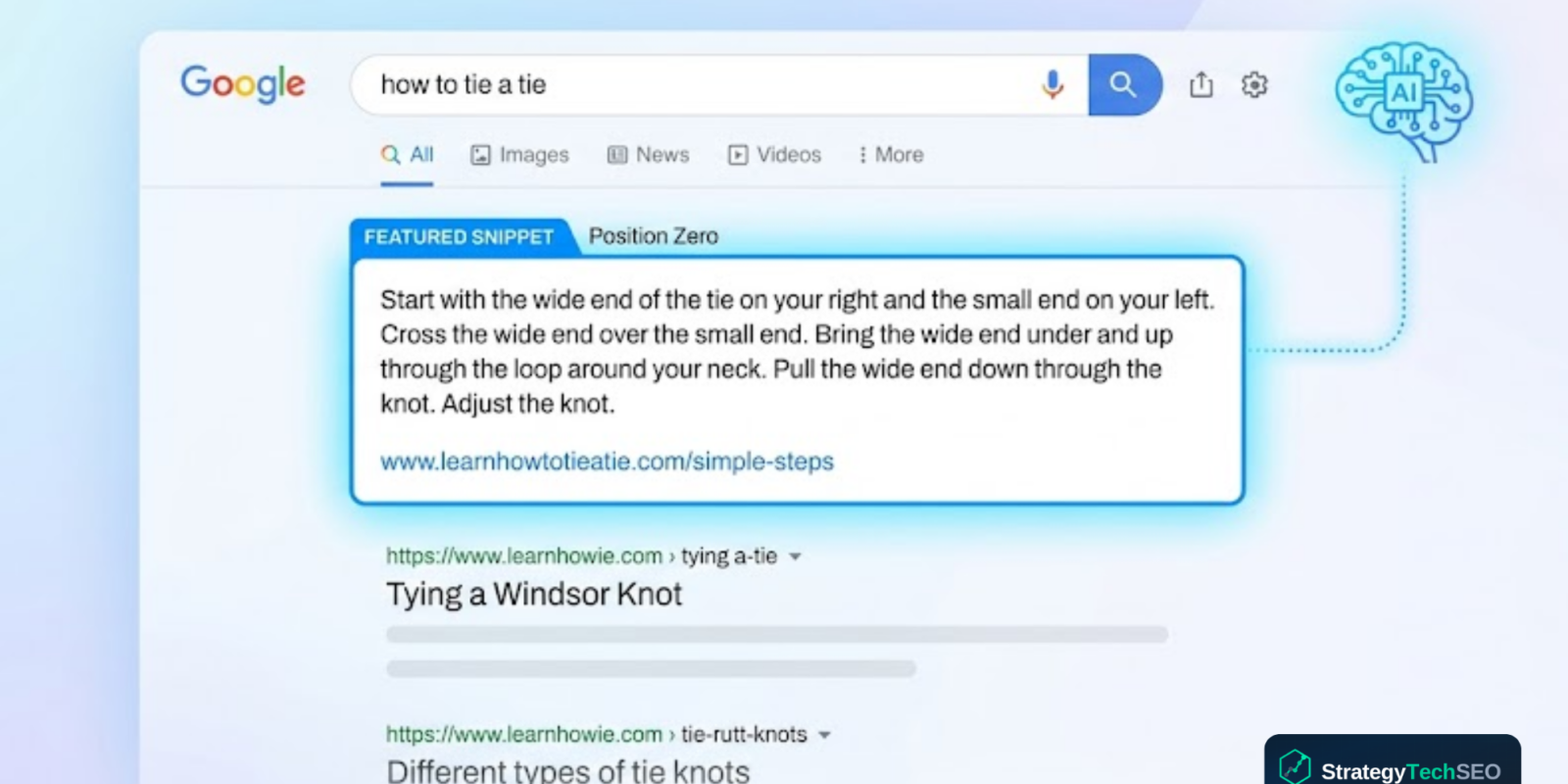
Featured snippets sit at the very top of Google search results. They pull a direct answer from a webpage and display it in a box above the first organic listing. Understanding how to get featured snippets is one of the most practical skills in modern SEO because the same formatting that wins position zero also feeds AI answer engines like ChatGPT, Perplexity, and Google AI Overviews.
Featured snippets account for roughly 42.9% of total clicks on a search results page, giving them the highest click-through rate of any SERP element. That alone makes them worth pursuing. But there is a bigger reason to care: the answer-first content structure that triggers snippets is the exact structure that generative engines pull from when building AI citations. Winning a snippet today means you are building the formatting habits that keep your content visible across both traditional and AI-powered search.
This guide walks through the content structure, schema markup, and optimization techniques that earn featured snippets and position your content for AI answers.
Why Featured Snippets Still Matter in 2026
Google’s AI Overviews have changed the search landscape. Featured snippet visibility on desktop declined over the past year as AI Overviews expanded. However, featured snippets and AI Overviews rarely appear together on a single search results page. Google tends to show one or the other, which means snippets remain the dominant answer format for millions of queries that do not trigger an AI Overview.
Nearly 1 in 5 mobile searches still display a featured snippet. And 40.7% of voice search answers come directly from featured snippets. For any SEO strategy targeting informational queries, snippets remain a primary visibility channel.
More importantly, the content patterns that win snippets overlap almost entirely with the patterns that earn AI citations. Answer-first formatting, concise paragraph answers under 50 words, and clear heading structures are what both systems reward. Optimizing for one optimizes for both.
Featured snippets and AI Overviews rarely appear on the same search result page. Google shows one or the other. This means snippets remain the dominant answer format for queries that do not trigger an AI Overview.
The Three Featured Snippet Formats
Google displays three main snippet formats, and each requires a slightly different content approach.
Paragraph snippets account for about 70% of all featured snippets. They pull a short block of text, typically 40 to 50 words, that directly answers the search query. To win paragraph snippets, place a concise, complete answer immediately after the heading that contains the target question. Do not add introductory context before the answer itself.
List snippets make up roughly 19% of featured snippets. They appear as numbered or bulleted lists and are common for “how to” queries, step-by-step processes, and ranked items. Structure these sections with clear subheadings or list items that Google can extract as a self-contained set.
Table snippets are less common but highly valuable for comparison queries. Present data in clean HTML tables with clear column headers. Google will pull the table and display it directly in the SERP.
| Snippet Format | Share of Snippets | Best For |
|---|---|---|
| Paragraph | ~70% | Definitions, explanations, direct answers |
| List | ~19% | Step-by-step guides, ranked items, how-to queries |
| Table | ~11% | Comparisons, pricing, data-heavy queries |
How to Structure Content That Wins Snippets
The core principle is simple: every section of your content should lead with the answer, then follow with supporting detail. This is the answer-first format, and it works because both Google’s snippet algorithm and AI language models scan for the most direct, concise response to a question.
Here is the structure that consistently earns featured snippets:
Question-Based Headings
Use question-based H2 and H3 headings. Mirror the exact phrasing people type into search. If the query is “what is a featured snippet,” make that your H2. Google matches headings to queries when selecting snippet content.
The Snippet Zone
Answer the question in the first 40 to 60 words after the heading. Write a self-contained answer that makes sense on its own, without requiring the reader to scan surrounding paragraphs for context. Google consistently selects paragraphs in this word range.
Follow With Depth
After the concise answer, expand with examples, data, context, and practical guidance. This satisfies both the snippet algorithm (which only needs the short answer) and the reader (who wants the full picture).
Self-Contained Sections
Each H2 section should function as a standalone chunk. AI models and snippet algorithms both evaluate sections independently. If your answer depends on information from a previous section, it is less likely to be selected.
Use lists and tables where they fit naturally. Step-by-step instructions belong in numbered lists. Comparison data belongs in tables. Do not force paragraph format when a list or table communicates more clearly.
This structure means your content has effectively answered the question in every section, giving Google and AI engines multiple extraction points throughout a single article.
Schema Markup That Supports Snippet Selection
Structured data does not guarantee a featured snippet, but it improves your eligibility. Schema markup acts as a translation layer, helping search engines and AI systems understand exactly what your content represents.
Two schema types are most relevant for snippet optimization:
The FAQPage schema is built for pages that contain a list of questions and answers. When you add FAQPage markup, you signal to Google that specific sections of your page are structured Q&A pairs. This makes extraction straightforward and increases the chance that your answer appears in both snippets and People Also Ask boxes.
HowTo schema works for step-by-step instructional content. It breaks your guide into named steps with descriptions, which aligns perfectly with how Google builds list-format snippets.
Beyond these, an Article schema with proper headline, datePublished, and author fields strengthens your overall organic search authority signals. AI systems increasingly favor content with clear authorship and publication dates when selecting sources for citations.
Always test your schema with Google’s Rich Results Test before publishing. Invalid markup is worse than no markup because it can prevent your page from being considered for rich results entirely.
Optimizing for People Also Ask
People Also Ask (PAA) boxes appear on over 75% of Google search results pages. They represent a secondary snippet opportunity because each PAA answer is essentially a mini featured snippet pulled from a webpage.
To optimize for PAA:
- Research related questions. Tools like AlsoAsked, AnswerThePublic, and Google’s own PAA boxes reveal the questions people ask around your target topic. Build dedicated H2 or H3 sections for the most relevant ones.
- Keep PAA answers tight. PAA answers tend to be even shorter than standard featured snippets. Aim for 30 to 50 words in the direct answer, then expand below.
- Stack multiple questions on one page. A single, well-structured article can win multiple PAA positions. Each question-and-answer section is evaluated independently, so one comprehensive page can capture several PAA slots across related queries.
PAA optimization also feeds AI answer engines directly. When ChatGPT or Perplexity pulls answers for conversational queries, they look for the same concise, question-matched content blocks that Google uses for PAA.
Technical Factors That Affect Snippet Eligibility
Content structure drives snippet selection, but technical SEO determines whether your page is eligible in the first place.
- Page speed matters. Slow pages are less likely to be selected for snippets because Google prioritizes pages that deliver fast user experiences. Aim for Core Web Vitals scores in the green range across all three metrics.
- Crawlability is foundational. If Googlebot cannot efficiently crawl and render your page, it cannot extract snippet content. Ensure your pages are not blocked by robots.txt, do not rely heavily on JavaScript for critical content rendering, and have clean internal linking structures.
- Mobile optimization is required. Google uses mobile-first indexing, and featured snippets on mobile are among the most visible SERP elements. Your content must render correctly on mobile devices with no layout shifts or content clipping.
- Freshness signals help. Pages with recent publication or update dates tend to win snippets over older, stale content. Include visible dates on your pages and update your content when data or best practices change.
From Snippets to AI Citations: The Bigger Picture
Featured snippets are not the end goal. They are the entry point to a larger visibility strategy that spans traditional search and AI-powered answer engines.
The same content principles that win snippets, answer-first formatting, self-contained sections, clean schema markup, and strong authority signals are exactly what generative engines use to select citations. When you optimize for featured snippets, you are simultaneously building content that ChatGPT, Perplexity, Google AI Overviews, and future AI systems can cite with confidence.
Think of featured snippet optimization as the foundation layer. It disciplines your content creation process around clarity, structure, and directness. Those habits compound over time, making every piece of content you publish more likely to earn visibility across every search surface.
Start with your highest-traffic informational pages. Restructure them using the answer-first format. Add FAQ or HowTo schema. Monitor your snippet performance in Google Search Console. Then apply the same approach to every new article you publish.
The content that ranks at position zero today is the content that AI will cite tomorrow.
Win Position Zero and AI Citations at the Same Time
Featured snippets are the gateway to AI visibility. StrategyTech SEO helps brands structure content that earns position zero in Google and gets cited by ChatGPT, Perplexity, and AI Overviews.
Sources & References
- Shno.co. “Featured Snippet Statistics for 2026: CTR, Prevalence, Format Breakdown, Voice Search, and AI Overview Impact.” shno.co
- Google Search Central. “Featured Snippets and Your Website.” developers.google.com
- Google Support. “Featured Snippets in Search.” support.google.com
- Marie Haynes. “Featured Snippets.” mariehaynes.com
- Nightwatch. “How to Optimize for Featured Snippets (+Examples & Tips).” nightwatch.io
- Ahrefs. “Featured Snippets Study: 112M Queries Analyzed.” ahrefs.com
- Keywords Everywhere. “Are Featured Snippets Still a Thing? (2026 SEO Guide).” keywordseverywhere.com

StrategyTech SEO
StrategyTech SEO helps businesses grow organic visibility through technical audits, on-page optimization, and data-driven search strategies. We turn SEO from guesswork into measurable results.