SEO vs AEO vs GEO: What Is the Difference and Which Do You Need?
Understanding the differences between SEO vs AEO vs GEO is now essential for any business that wants to remain visible across the full spectrum of search. Traditional search engines still drive the majority of web traffic. But answer engines and generative AI platforms are growing fast, and each one evaluates content differently. Gartner projects that traditional search volume will drop 25% by 2026 as users shift toward AI chatbots and virtual agents. That does not mean SEO is dying. It means the definition of “search optimization” is expanding, and your content strategy needs to keep pace.
This guide breaks down how each approach works, where they overlap, and how a single piece of content can be optimized for all three at once.
What Each Acronym Actually Means
Before comparing strategies, it helps to define exactly what each one targets.
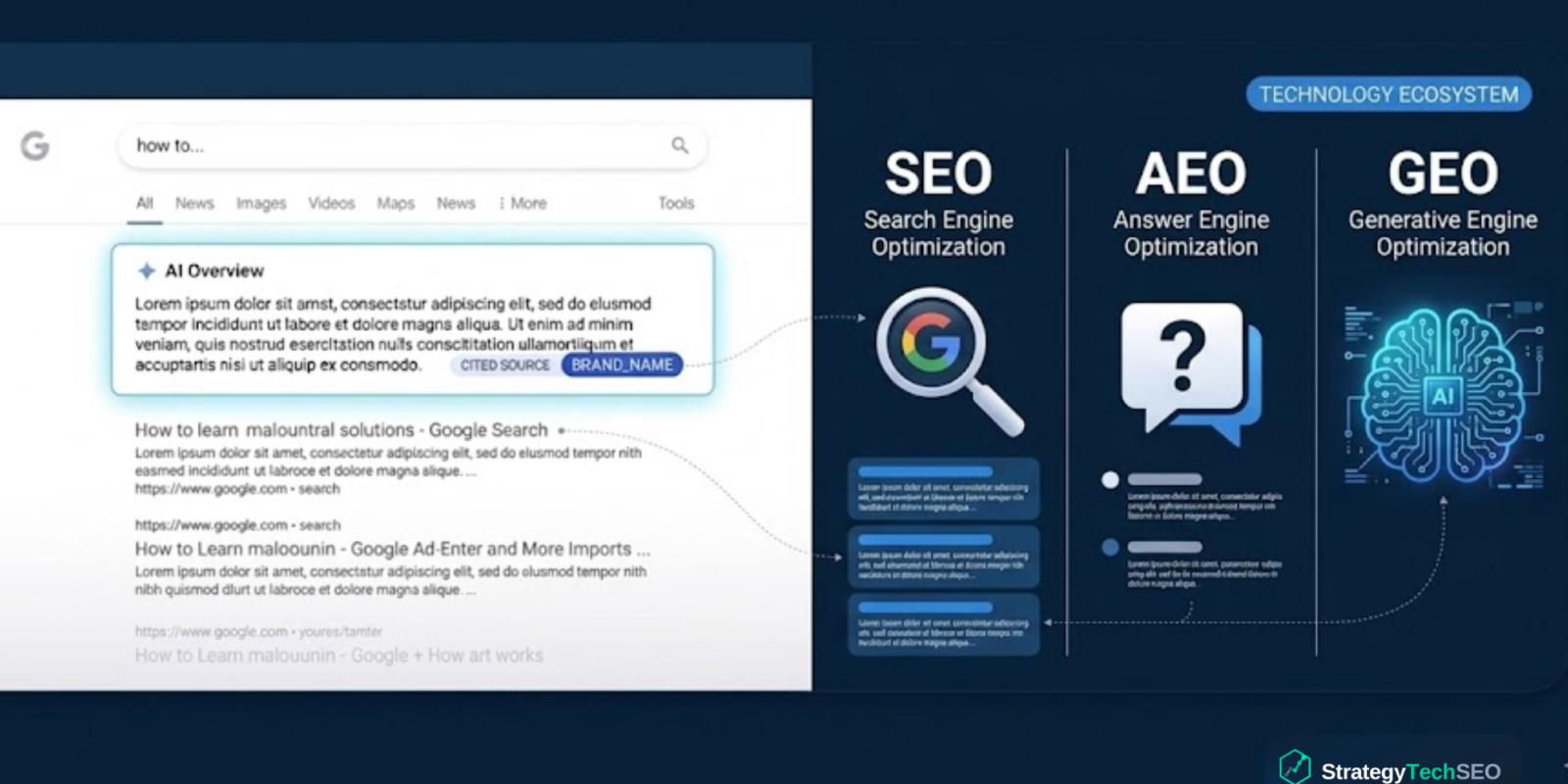
SEO (Search Engine Optimization) is the practice of improving your content so it ranks higher in search results on traditional search engines like Google and Bing. The goal is to earn clicks from blue links by matching user queries with relevant, authoritative pages. SEO has been the foundation of digital visibility for over two decades, and it still accounts for the largest share of organic discovery.
AEO (Answer Engine Optimization) focuses on getting your content selected as the direct answer to a user’s question. Answer engine optimization targets featured snippets, People Also Ask boxes, voice search results, and knowledge panels. Instead of just ranking on the page, AEO aims to be the single answer a search engine surfaces at the top.
GEO (Generative Engine Optimization) is the newest discipline. Generative engine optimization is about making your content citable by AI-powered platforms like ChatGPT, Google Gemini, Perplexity, and Microsoft Copilot. These large language models synthesize information from multiple sources into a single response. GEO ensures your brand is part of that synthesis.
All three share the same raw material: your content. The difference lies in how that content is evaluated, surfaced, and consumed.
Why the Distinction Matters Now
The search landscape has fractured. Users no longer follow a single path from query to website. A 2025 analysis from Search Engine Land found that AI-referred sessions increased 527% year over year. Meanwhile, 68% of B2B decision-makers now start their research with AI tools rather than traditional search engines.
This does not mean traditional SEO is obsolete. Google still processes billions of queries daily, and search results pages remain the primary discovery channel for most industries. But if your strategy only targets blue links, you are missing two rapidly growing channels where your competitors may already be visible.
How Each Strategy Works
SEO: Ranking in Search Results
Traditional SEO optimizes for search engine crawlers and ranking algorithms. The core tactics include keyword research, on-page optimization, technical site health, backlink building, and content depth. Success is measured by rankings, organic traffic, and conversions from search results.
SEO rewards comprehensive, well-structured content that demonstrates expertise and earns links from authoritative sources. Schema markup helps search engines understand your content, but the primary goal is earning a position on the results page that drives a click.
AEO: Winning the Direct Answer
Answer engines pull from your content to deliver a concise response directly in the search interface. To win these placements, your content needs to be structured in a way that answer engines can parse quickly: clear question-and-answer formats, concise paragraph answers (40 to 60 words), comparison tables, and numbered lists.
AEO also plays a significant role in voice search. When someone asks Siri or Alexa a question, the response is typically pulled from a featured snippet or knowledge panel. Structured data and schema markup make your content machine-readable, increasing the likelihood of selection.
The key difference from SEO: AEO success does not always require a click. Your content delivers value on the search results page itself. That sounds like a loss, but brands that consistently own the answer position build authority that drives downstream conversions.
GEO: Getting Cited by AI Platforms
Generative AI platforms work differently from both traditional search engines and answer engines. They do not rank pages or select snippets. Instead, they synthesize information from multiple sources and present a unified response. Your content either becomes part of that response or it does not.
GEO focuses on making your content the kind of source that large language models reference. This means clear, factual writing with cited statistics. It means publishing original research and expert perspectives that AI platforms find trustworthy. It means structuring content so AI-driven systems can extract and attribute specific claims to your brand.
According to research from Conductor, companies that earn AI citations see a 35% higher organic click-through rate than non-cited competitors for the same queries. Being referenced by an AI platform does not replace your website. It drives qualified traffic to it.
| Dimension | SEO | AEO | GEO |
|---|---|---|---|
| Primary Goal | Rank in search results and earn clicks | Be selected as the direct answer | Get cited by AI platforms |
| Target Platforms | Google, Bing, traditional search engines | Featured snippets, PAA, voice assistants | ChatGPT, Gemini, Perplexity, Copilot |
| Content Format | Comprehensive, keyword-optimized pages | Concise Q&A, tables, numbered lists | Factual prose with cited data and expert quotes |
| Success Metric | Rankings, organic traffic, conversions | Snippet ownership, voice answer rate | AI citation rate, brand mentions in AI responses |
| Click Required? | Yes — clicks drive value | Not always — value on SERP itself | Not always — citation drives downstream traffic |
| Key Tactics | Keywords, backlinks, technical SEO, schema | Answer-first structure, schema, voice optimization | Original research, expert sourcing, entity signals |
The “Same Content, Three Lenses” Framework
Here is the practical takeaway: you do not need three separate content strategies. You need one strategy that satisfies all three evaluation systems simultaneously.
Consider a single article about email marketing best practices. From an SEO perspective, you optimize for target keywords, build internal links, earn backlinks, and ensure fast page speed. Through the AEO lens, you structure content with clear H2 questions, concise answers in the opening paragraph of each section, and comparison tables that featured snippets can pull. Through the GEO lens, you include original data, cite credible sources, add expert quotes, and write in a clear, factual tone that AI platforms trust enough to reference.
The same content serves all three channels. The difference is intentional structure.
For every piece of content, ensure it has:
- Target keyword and semantic keywords for search engine visibility
- Concise, direct answers to common questions within the first 50 words of each section for answer engines
- Original statistics, expert perspectives, and cited sources that make your content worth referencing for AI platforms
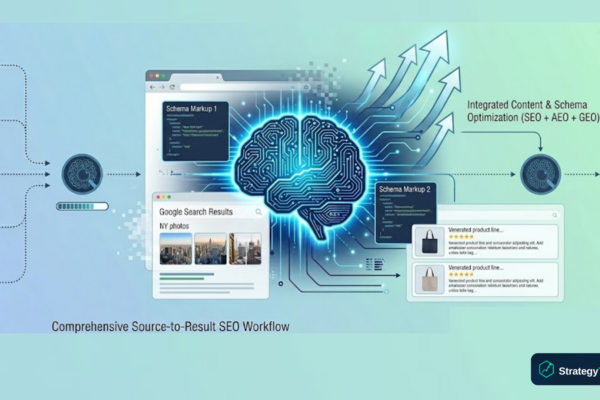
- Schema markup that makes your content machine-readable across all three systems
- Logical heading structure that helps both crawlers and AI models understand your content hierarchy
What Happens If You Only Optimize for One
- SEO only: You still win clicks from search results, but you miss featured snippet placements and AI citations entirely. As AI overviews expand across more queries, your organic click-through rate will decline even if your rankings hold steady.
- AEO only: You might own the answer box for specific queries, but without broader SEO fundamentals, your content will not rank for the long tail variations that drive volume. You also will not appear in generative AI responses.
- GEO only: You might earn AI citations, but without search engine visibility, you are relying entirely on AI platforms to send traffic. That is a fragile strategy given how quickly these platforms evolve.
How to Start Unifying Your Strategy
You do not need to rebuild your content program from scratch. Start with these adjustments to your existing workflow:
Audit Your Top 20 Pages
Check whether each one has a clear question-and-answer structure (for AEO), cited sources and original data (for GEO), and strong keyword targeting with schema markup (for SEO). Identify gaps and prioritize updates based on traffic potential.
Add Structured Data Everywhere
Schema markup is the single tactic that benefits all three channels. It helps traditional search engines understand your content, qualifies you for answer engine features, and makes your content machine-readable for AI platforms.
Publish Citeable Claims
Every article should include at least two to three original data points, expert quotes, or unique frameworks that AI platforms can attribute to your brand. Citeable content is the currency of GEO visibility.
Monitor All Three Channels
Track traditional rankings and organic traffic for SEO. Monitor featured snippet and People Also Ask ownership for AEO. Use tools that track AI citations and brand mentions across generative platforms for GEO.
The brands that treat SEO, GEO, and AEO as a single discipline — not three competing priorities — are the ones building durable visibility in a search landscape that changes every quarter.
Unify Your Search Strategy Across SEO, AEO, and GEO
The search landscape has fractured into three discovery channels. StrategyTech SEO helps brands optimize a single content strategy that earns rankings, wins featured snippets, and gets cited by AI platforms — so you are visible wherever your audience searches.
Sources & References
- Gartner. “Predicts 2025: Search Marketing.” (2024)
- Search Engine Land. “AI Referred Sessions Surge 527% Year Over Year.” (2025)
- Conductor. “2026 AEO/GEO Benchmarks Report.” (2026)
- Semrush. “State of Search 2025.” (2025)
- BrightEdge. “Generative AI and Search Behavior Study.” (2025)
- HubSpot. “AI Content Optimization: How to Get Found in Google and AI Search.” (2026)
- Forrester. “B2B Buyer Behavior Survey.” (2025)

StrategyTech SEO
StrategyTech SEO helps businesses grow organic visibility through technical audits, on-page optimization, and data-driven search strategies. We turn SEO from guesswork into measurable results.