What Is Generative Engine Optimization? The Complete 2026 Guide

What is Generative engine optimization, it is the practice of structuring and optimizing your content so that artificial intelligence platforms cite it in their generated responses. If you have spent years building your visibility in Google through search engine optimization, GEO is the natural next step. It applies many of the same principles you already use, adapted for a new class of AI search platforms that synthesize answers rather than list links.
This is not a replacement for what you know. It is an extension of it. The skills that make content rank in traditional search engines are the same skills that make content citable by large language models like ChatGPT, Perplexity, Google AI Overviews, and Claude. Generative engine optimization GEO simply adds a layer of precision to how you structure, source, and present information so that AI systems can extract and reference it with confidence.
This guide defines GEO, explains how it differs from traditional SEO and AEO, walks through the core optimization techniques, and shows why your existing SEO expertise gives you a significant head start.
How Generative Engines Work
Traditional search engines crawl the web, index pages, and rank them based on relevance signals like backlinks, keyword matching, and authority. When a user submits a query, the engine returns a ranked list of links. The user clicks through to find the answer.
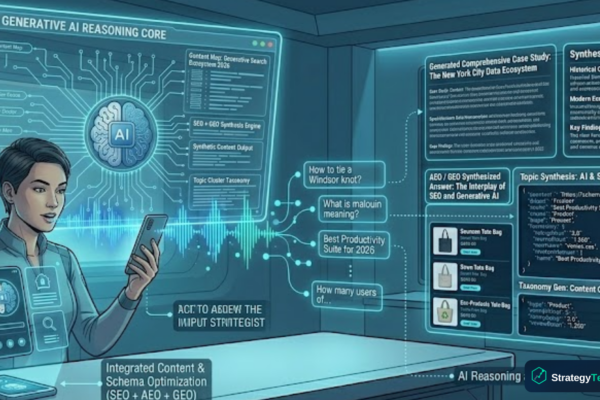
Generative engines operate differently. Platforms like ChatGPT, Perplexity, and Google AI Overviews use large language models to process queries, retrieve information from multiple sources, and synthesize a single, unified natural language response. Instead of presenting ten blue links, they deliver a composed answer that pulls facts, explanations, and context from across the web.
The critical difference for content creators is this: generative engines do not send users to your page by default. They cite your content within a generated answer. Your brand appears as a referenced source, not as a link in a list. This means AI visibility depends on whether your content is structured clearly enough for the model to extract, attribute, and present it accurately.
Understanding this shift is essential because it changes what “ranking” means. In traditional search, ranking means appearing on page one. In AI search, ranking means being selected as a trusted source within an AI driven response.
In traditional search, your page appears as a link. In generative search, your content appears as a cited source inside an AI generated answers response. The user may never visit your site, but your brand gains authority as a referenced expert.
GEO, SEO, and AEO: How They Connect
One of the most common misconceptions about GEO is that it replaces SEO. It does not. SEO and GEO are complementary disciplines that serve different parts of the same discovery journey.
Search engine optimization focuses on earning organic rankings in search results by optimizing for relevance, authority, and technical performance. The goal is to increase click through rate and website traffic.
Answer Engine Optimization (AEO) focuses on earning position-zero placements, such as featured snippets, People Also Ask boxes, and voice search answers. AEO targets the direct-answer layer that sits atop traditional search results.
Generative engine optimization GEO focuses on ensuring your content is cited in AI generated answers produced by platforms that synthesize responses from multiple sources. GEO targets the AI layer where generative AI models compose answers rather than rank pages.
| Discipline | Primary Goal | Target Platform | Success Metric |
|---|---|---|---|
| SEO | Organic rankings | Google, Bing | Click through rate, traffic |
| AEO | Position zero | Featured snippets, PAA, voice | Answer visibility |
| GEO | AI citations | ChatGPT, Perplexity, AI Overviews | Source mentions, brand authority |
The relationship between these three disciplines is additive, not competitive. Content that ranks well in traditional search is more likely to be indexed and accessible to AI crawlers. Content that wins featured snippets is already formatted in the answer-first structure that AI models prefer. And content optimized for GEO is structured with the clarity, authority, and source quality that strengthen both SEO and AEO performance.
If your content already performs well in organic search, you are closer to GEO readiness than you think. The adjustment is in precision, not in starting over.
Why GEO Matters Now
The data behind the shift toward AI search is substantial. ChatGPT reached 800 million weekly active users by late 2025, processing over 2.5 billion prompts per day. Google AI Overviews now appear in at least 16% of all searches and reach over 2 billion monthly users. AI-referred sessions to websites grew 527% year over year in the first half of 2025.
At the same time, traditional search behavior is contracting. According to Gartner, the volume of traditional search engine usage is projected to fall by 25% by the end of 2026 as users shift toward AI chatbots and virtual agents. Zero-click searches now account for 60% of all Google queries, meaning the majority of searches end without a user clicking any result.
These numbers do not mean SEO is dead. They mean that the surface area for discovery is expanding. Users still search on Google, but they also ask ChatGPT, query Perplexity, and interact with AI Overviews. Brands that optimize only for traditional search are invisible in these new channels. Brands that add GEO to their strategy capture visibility across the full spectrum of how people find information.
Research from Princeton University found that GEO techniques improve visibility in generative engines by up to 40% on average. And 63% of companies that have optimized for GEO report a measurable increase in AI visibility. The opportunity is real and growing.
63% of companies that have optimized for GEO report a measurable increase in AI visibility. The brands that start now gain a first-mover advantage as AI search adoption continues to accelerate.
Core GEO Optimization Techniques
The techniques that drive GEO performance will feel familiar if you have experience with creating content for SEO. The difference is in emphasis. GEO prioritizes extractability, source authority, and structural clarity above all else.
Answer-First Structure
Structure content around clear questions and direct answers. AI models scan for concise, self-contained answer blocks. Each section should open with a direct response to a specific question, followed by supporting detail. This mirrors how featured snippets work, and it is the same pattern that makes content citable by generative AI systems.
Verifiable Data and Sources
Include verifiable data and cite authoritative sources. Large language models evaluate source quality when selecting citations. Content that references specific statistics, names credible studies, and links to primary sources is more likely to be cited than content that makes unsupported claims.
Clear, Precise Language
AI models parse natural language to extract meaning. Content with clean sentence structures, unambiguous phrasing, and logical paragraph flow is easier for models to process and cite accurately. Optimized content for GEO avoids jargon-heavy constructions and prioritizes clarity.
Schema Markup
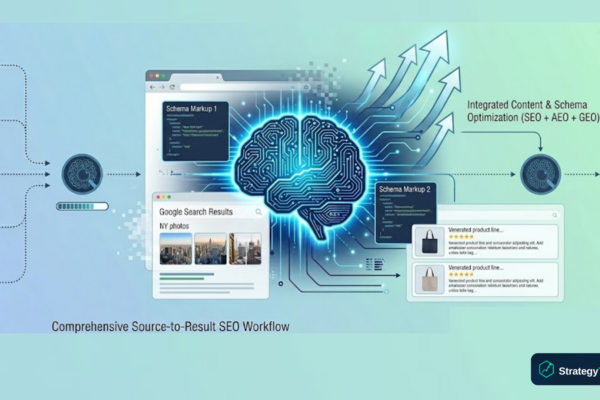
Use structured data and schema markup. Schema acts as a machine-readable layer that helps AI systems understand what your content represents. Article, FAQPage, and HowTo schema types are particularly valuable for GEO because they map your content into formats that AI models can parse directly.
Entity Consistency
Maintain entity consistency across the web. AI models build an understanding of brands, authors, and topics through entity recognition. Consistent naming, descriptions, and claims across your website, social profiles, and third-party mentions strengthen the signals that models use to evaluate trustworthiness.
Content Freshness
Update content regularly. Freshness matters to generative engines. Models favor recently published or updated content when selecting sources. Include visible publication dates and regularly revisit high-value pages.
How Your SEO Skills Transfer to GEO
If you have been practicing search engine optimization for any length of time, you already possess most of the skills GEO requires. The transfer is direct.
- Keyword research becomes user intent mapping. Instead of targeting search volume, you map the specific questions users ask AI platforms and structure your content to answer them precisely.
- On-page SEO optimization becomes content structuring. The same heading hierarchy, internal linking, and content organization principles apply, with additional emphasis on self-contained answer blocks.
- Link building becomes a source of authority. The credibility signals that backlinks represent in traditional search are mirrored by citation patterns, brand mentions, and entity consistency in the AI ecosystem.
- Technical SEO becomes AI accessibility. Clean crawlability, fast page speed, structured data, and proper indexation are just as important for AI crawlers as they are for Googlebot.
The core of GEO is not learning a new discipline. It is applying your existing expertise with a sharper focus on how AI systems consume, evaluate, and reference content. The marketers who recognize this connection will adapt faster than those who treat GEO as something entirely foreign.
Getting Started with Generative Engine Optimization
The most effective way to begin is with content you already have. Audit your top-performing SEO pages and evaluate them through a GEO lens. Ask whether each page opens with a direct answer to the primary query. Check whether your claims are supported by verifiable data. Review your schema markup. Assess whether your content sections are self-contained enough for an AI model to extract a meaningful answer from any single section.
From there, apply the answer-first structure to every new piece of content you publish. Add FAQ or HowTo schema where appropriate. Build a consistent entity presence across your website and external platforms. Monitor your appearance in AI-generated answers using tools designed for GEO tracking.
The shift from SEO to SEO and GEO is not a revolution. It is an evolution. The same commitment to quality, structure, and authority that drives organic rankings is what drives AI citations. The brands that recognize this early will own the next generation of search visibility.
Ready to Optimize for the Next Generation of Search?
Generative engine optimization builds on the SEO foundation you already have. StrategyTech SEO helps brands structure content that earns citations from ChatGPT, Perplexity, Google AI Overviews, and the AI platforms that follow.
Sources & References
- Search Engine Land. “What is Generative Engine Optimization (GEO)?” searchengineland.com
- Princeton University. “GEO: Generative Engine Optimization.” arxiv.org
- Gartner. “Predicts 2025: Search Marketing.” gartner.com
- Similarweb. “Generative Engine Optimization: The Complete 2026 Guide.” similarweb.com
- Forbes Agency Council. “Generative Engine Optimization (GEO): The Future Of Search Is Here.” forbes.com
- Coursera. “What Is Generative Engine Optimization?” coursera.org
- Marketing LTB. “98+ Generative Engine Optimization (GEO) Statistics for 2025.” marketingltb.com
- Incremys. “2026 GEO Statistics: Applications, Market and Future Outlook.” incremys.com

StrategyTech SEO
StrategyTech SEO helps businesses grow organic visibility through technical audits, on-page optimization, and data-driven search strategies. We turn SEO from guesswork into measurable results.