Does Keyword Intent Change? How It Now Drives Visibility in Generative and Answer Engines
Does keyword intent change the way your content gets discovered online? The short answer is yes, and the shift is far more significant than most digital marketers realize. For years, the industry treated keyword research as the foundation of every SEO strategy. Match the right phrases, earn the right rankings, collect the traffic. That formula worked when Google’s blue links were the only game in town. But today, search engines are no longer the only engines that matter.
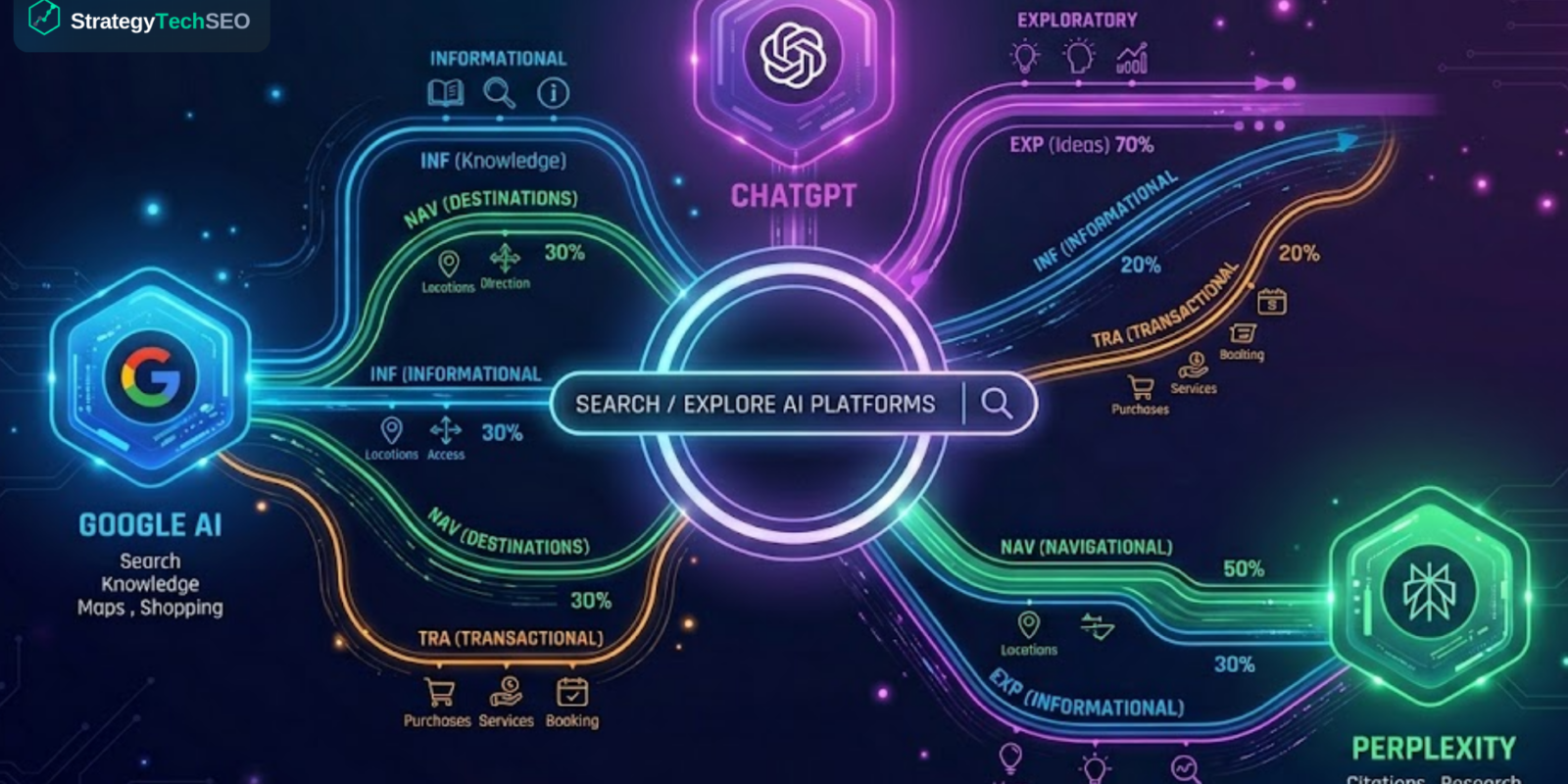
Generative Engine Optimization (GEO) and Answer Engine Optimization (AEO) have introduced entirely new surfaces where content can appear. AI Overviews now trigger on 67 percent of commercial investigation queries in Google alone. ChatGPT Search handles roughly 18 percent of all search queries. Perplexity has captured 12 percent market share among professionals and researchers. These are not future projections. These are the platforms where people search for answers right now.
The real question is no longer whether your content ranks. It is whether your content gets cited, quoted, or surfaced by the AI systems that increasingly sit between your audience and your website.
Matching Keywords Used to Be Enough. It Is Not Anymore.
Traditional keyword research focused on volume and difficulty. You found high-volume phrases, built landing pages around them, and optimized for the results page. The intent behind those keywords mattered, but only within a narrow framework. Informational intent meant blog posts. Transactional intent meant product pages. Navigational intent meant making sure your brand showed up for your own name.
That framework still applies to traditional search engines. But it barely scratches the surface of how AI-powered platforms decide what content to surface.
When someone types a query into ChatGPT or Perplexity, they are not looking for a list of ten blue links. They want a synthesized, contextual answer drawn from multiple sources. The AI does not rely on matching keywords to pages. It interprets the full scope of user intent, pulls from content that demonstrates depth and authority, and constructs a response. Your content either becomes part of that response or it does not exist in that conversation at all.
Keyword intent is no longer just about understanding what people search for. It is about understanding how different types of search intent map to different platforms and content formats. The engine that surfaces your content depends entirely on the intent behind the query.
The New Types of Search Intent That GEO and AEO Demand
The classic four types of search intent — informational, navigational, transactional, and commercial — remain relevant for traditional SEO strategy. If someone searches for “CRM pricing,” that is transactional intent, and Google will serve product pages and comparison tables. If someone searches for “what is a CRM,” that is informational intent, and Google will favor blog posts and featured snippets.
But AI search has created three additional intent categories that most content strategies are not built for.
Exploratory Intent
The user investigates a broad topic without a fixed outcome. Example: “How are mid-size agencies handling client reporting in 2026?” No single correct answer exists. The AI assembles perspectives from multiple authoritative sources. If your content strategy only targets specific keywords, you will never appear in these responses.
Comparative Research Intent
Deeper than commercial investigation. The user asks an AI to weigh tradeoffs based on their specific situation: “Should a five-person marketing team use HubSpot or ActiveCampaign if their priority is email automation?” The AI needs content that addresses nuance, not just feature lists.
Synthesis Intent
The most demanding type. The user wants an AI to combine information from multiple domains into one cohesive answer: “How does keyword intent affect content strategy differently for B2B versus direct-to-consumer brands?” Each section must be independently understandable and citable.
Why This Matters
These three emerging intent types are exactly where GEO and AEO separate themselves from traditional search optimization. Creating content that serves exploratory, comparative, and synthesis intent earns your brand citations in AI-generated answers instead of just rankings in a SERP feature.
| Intent Type | Where It Performs Best | Content Format Needed |
|---|---|---|
| Informational | Google organic, featured snippets | Blog posts, how-to guides, definitions |
| Navigational | Google organic, brand SERPs | Branded landing pages, homepages |
| Transactional | Google Shopping, product SERPs | Product pages, pricing pages, CTAs |
| Commercial | Google organic, AI Overviews | Comparison pages, reviews, roundups |
| Exploratory | ChatGPT, Perplexity, AI Overviews | In-depth analysis, trend reports, perspectives |
| Comparative Research | ChatGPT, Perplexity, Claude | Context-rich comparisons, use-case breakdowns |
| Synthesis | ChatGPT, Perplexity, Gemini | Modular, citable sections with standalone insights |
Intent Now Determines Which Engine Surfaces Your Content
Here is the strategic shift that clients and service providers alike need to internalize. Understanding intent no longer just helps you rank higher; it also helps you understand your audience. It determines which platform your content appears on.
Informational intent and navigational intent still perform well in traditional search results. If someone wants to reach a specific website or learn a basic definition, Google’s organic results and featured snippets handle that effectively. Your standard content strategy — well-structured blog posts, clear headings, schema markup — continues to work for these queries.
But when intent moves into exploratory, comparative, or synthesis territory, the audience shifts to AI platforms. People search differently in ChatGPT than they do in Google. Their queries are longer, more conversational, and loaded with context. Voice search, which now accounts for 47 percent of all searches, accelerates this pattern further. When people search by speaking, they naturally express richer intent than when they type two or three words into a search bar.
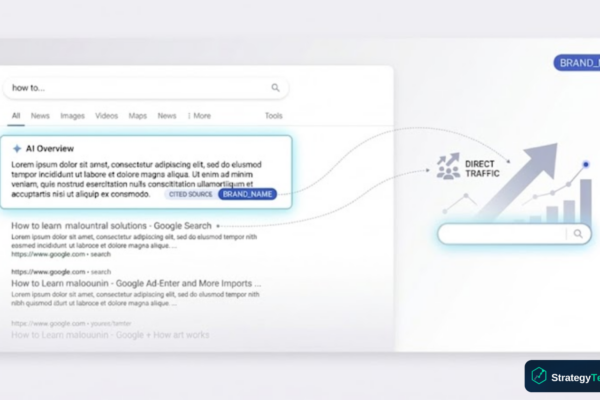
This means your content strategy needs to serve two distinct audiences simultaneously. The first audience finds you through traditional search engines using keyword-driven queries. The second audience never visits your site directly. They encounter your expertise through an AI citation in a ChatGPT response, a Perplexity answer card, or a Google AI Overview. Both audiences are valuable. Research shows that AI-driven visitors convert at 4.4 times the rate of standard organic visitors and spend 68 percent more time on site. Fewer clicks, but dramatically higher quality.
While position 1 CTR drops 58 percent when an AI Overview is present, AI-referred visitors convert at 4.4x the rate of standard organic traffic and spend 68 percent more time on your site. Intent-aligned content attracts fewer clicks but dramatically higher-quality visitors.
What This Means for Your Content Strategy Going Forward
The practical takeaway is that keyword research must evolve into intent mapping. Instead of starting with “what keywords should we target,” the better question is “what types of intent does our audience carry, and which platforms serve each type?”
From there, the content creation process changes. Every piece of content should be structured so that each section can stand on its own. AI systems cite passages, not pages. If your key insight is buried in paragraph twelve of a 3,000-word guide, no AI will extract it. Lead with direct answers. Support them with depth and evidence. Make every heading a clear signal of what that section covers.
This is not about abandoning SEO. It is about building a unified approach where traditional SEO, AEO, and GEO work as layers of the same SEO strategy.
- Optimize for the results page. Strong technical SEO and keyword alignment ensure your content still ranks in traditional search results and earns featured snippets for informational intent queries.
- Optimize for answer engines. Structure content in clear, extractable blocks. Lead every section with a direct answer. Use FAQ schema and concise definitions that answer engines can pull into search results.
- Optimize for generative engines. Demonstrate the depth, freshness, and authority that AI-powered systems reward with citations. Make each section independently citable so AI tools can extract your insights without needing the full page.
The brands and agencies that understand this shift will not just maintain their visibility. They will expand it across every surface where their audience looks for answers. Those who keep optimizing only for rankings will watch their traffic erode as AI-powered platforms capture an ever-larger share of the search journey.
Keyword intent does change. And the organizations that change with it will own the next era of search visibility.
Ready to Align Your Content Strategy With the New Search Landscape?
Stop optimizing for rankings alone. Start optimizing for visibility across every engine your audience uses — Google, AI Overviews, ChatGPT, and Perplexity. StrategyTech SEO helps brands build unified SEO, AEO, and GEO strategies that earn both clicks and citations.
Sources & References
- HubSpot. “Answer Engine Optimization Trends in 2026.” blog.hubspot.com
- Marketing Dive. “AEO, GEO and Accessibility: The 3 Forces That Will Define 2026 Marketing.” marketingdive.com
- Jeff Lenney. “Search Intent in 2026: The 3 New Intent Types AI Search Created.” jefflenney.com
- SE Ranking. “The 6 Types of Search Intent (Including the New Generative AI Intent).” seranking.com
- AgencyAnalytics. “Latest AEO Trends for 2026.” agencyanalytics.com
- FluxSERP. “Keyword Strategy for SEO, GEO & AEO in 2026.” fluxserp.com
- Search Engine Land. “Google Ads No Longer Runs on Keywords. It Runs on Intent.” searchengineland.com
- Stridec. “AEO Strategy Trends for 2026: What’s Changing in Answer Engine Optimization.” stridec.com

StrategyTech SEO
StrategyTech SEO helps businesses grow organic visibility through technical audits, on-page optimization, and data-driven search strategies. We turn SEO from guesswork into measurable results.