Voice Search Optimization in 2026: How to Rank When People Talk to AI
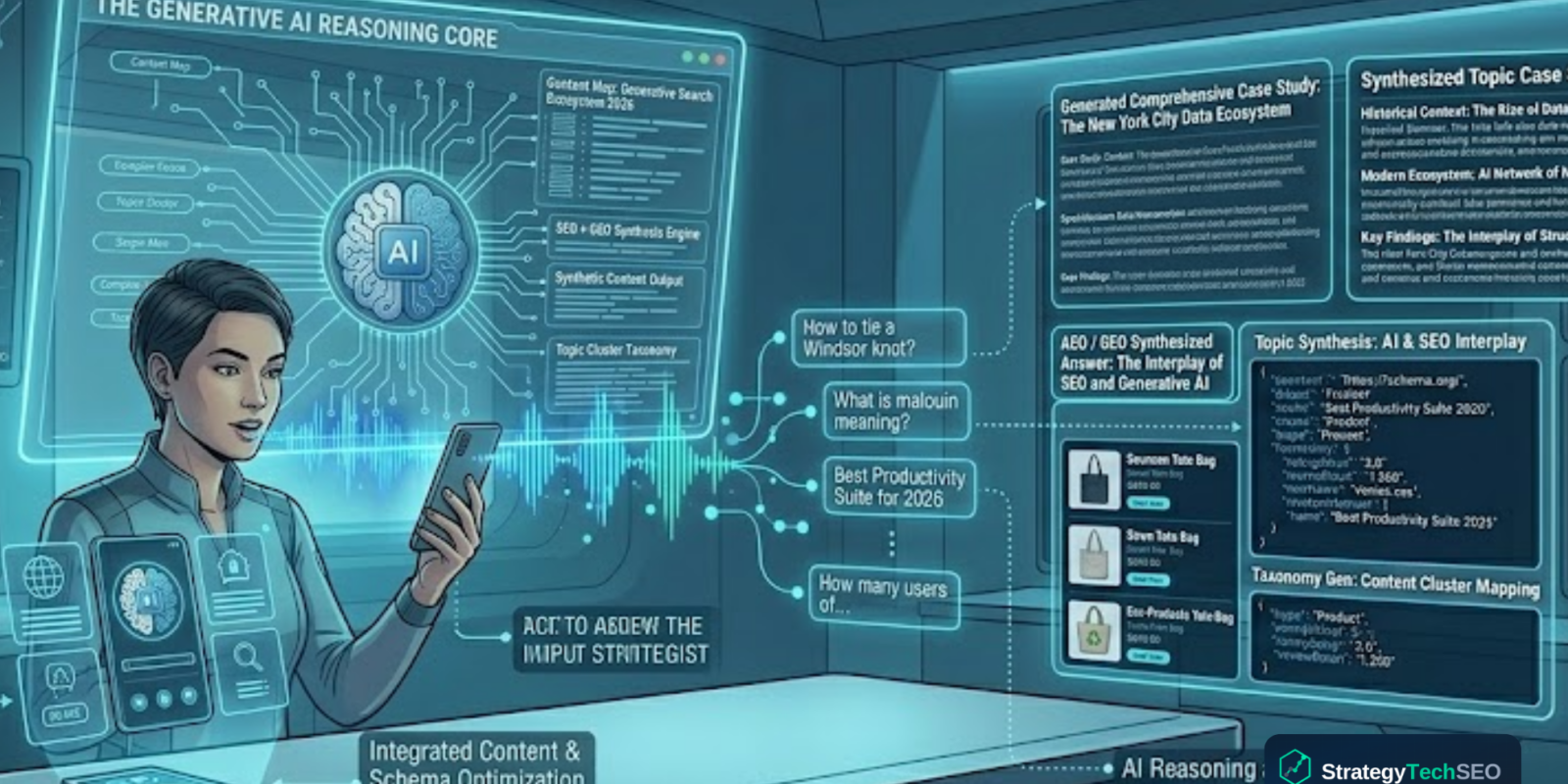
Voice search optimization in 2026 is no longer a future trend to watch. It is a present reality that reshapes how people find answers, choose businesses, and interact with the web. When someone speaks a query into their phone or smart speaker, they reveal something that typed searches often hide: exactly what they want, in their own words. That unfiltered expression of user intent is the reason voice search matters more than any keyword report. The gap between what people type and what people say is the gap between guessing at intent and hearing it directly.
This guide walks you through optimizing your content for voice search, from structuring pages for voice assistants to building a voice search strategy that captures conversational traffic across Google Assistant, Siri, and Alexa.
Why Voice Search Reveals True User Intent
When someone types a query, they condense their thought into a few short words. A typed search might be “best CRM small business.” But the same person asks their voice assistant, “What is the best CRM for a small business with less than ten people?” That spoken version tells you so much more about what they need. It has context. It has details. And it makes the intent crystal clear.
This is why voice search optimization is not just a tech task. It is a shift in how you think about the relationship between your content and the people who seek it. Voice queries are inherently question-based queries. They run from seven to ten words long. They use plain, daily language. And they tell you, in clear terms, what specific questions your readers are asking.
Traditional search trained marketers to think in short word chunks. Voice search asks you to think in full sentences, because that is how people really talk when they are not trimming words for a search box. The brands that recognize this shift and create content around it will own the voice layer that sits atop traditional SEO.
The Voice Search Landscape in 2026
The numbers tell a clear story. Over 8.4 billion voice assistants are active worldwide. In the United States alone, more than 153 million people use voice assistants regularly. Smart speaker use exceeds 40 percent of US households, and voice-enabled systems are standard in virtually every new vehicle sold.
Around 47 percent of users now rely on voice search for everyday queries. For local intent searches, voice share exceeds 50 percent. These are not projections. These are current usage patterns that directly affect how your content gets discovered and delivered.
| Voice Pipeline | Source for Answers | Key Optimization Focus |
|---|---|---|
| Google Assistant | Google Search (featured snippets) | Featured snippets, structured content, schema |
| Apple Siri | Apple-curated sources, Spotlight, Safari | Structured data, Apple Maps, clean HTML |
| Amazon Alexa | Bing for general queries | Bing optimization, Alexa Skills, local data |
The way voice search results work runs through these three main pipelines. Each rewards structured content, clear answers, and pages that load quickly enough to support real-time chat. If your page cannot be parsed and read aloud in seconds, it will not be the one the voice assistant picks.
How to Optimize Content for Voice Search
Building a voice search strategy starts with understanding what makes voice queries different from typed ones, then structuring your content to match. Here is the framework.
Write for Questions, Not Keywords
Voice queries are overwhelmingly question-based queries. People ask who, what, where, when, why, and how. Your content needs to anticipate these specific questions and answer them directly. This does not mean stuffing FAQ sections onto every page. It means structuring your content so that each section opens with a clear question and delivers a concise answer within the first two to three sentences.
The target length for a voice-friendly answer is 40-60 words. That is the range most voice assistants use when they read aloud a featured snippet. Write your lead answer in that range, then expand on it with supporting detail below. This gives you the best chance of earning the featured snippet position that voice assistants pull from.
Around 41% of voice search answers come from featured snippets. Keep your direct answer between 40 and 60 words, placed right after the heading. This is the exact format voice assistants extract and read aloud to users.
Use Natural, Conversational Language
Voice search rewards content that sounds like a real person explaining something clearly. Short sentences. Plain words. A tone that mirrors how someone would answer a friend who asked the same question. This is not about dumbing down your content. It is about removing the friction between your expertise and your reader’s comprehension.
When you create content with conversational phrasing, you match the way voice queries are spoken. That alignment between query language and content language is what search engines use to identify the best voice search results for a given question.
Implement Schema Markup and Structured Data
Schema markup and structured data tell search engines exactly what your content contains and how it is organized. For voice search, this is critical. Voice assistants need to extract a clean, specific answer from your page and deliver it in seconds. Structured content with proper schema makes that extraction reliable.
FAQPage Schema
Use for question-and-answer sections. Helps voice assistants identify and extract question-based queries with direct answers from your page.
HowTo Schema
Use for step-by-step guides and tutorials. Structures your process content so voice systems can walk users through each step clearly.
Speakable Schema
Google’s Speakable markup identifies sections of your page written to be read aloud. Tells Google Assistant exactly which content translates well to audio delivery.
Clean Heading Structure
Every H2 and H3 should clearly describe the content beneath it. This heading hierarchy gives both traditional search crawlers and voice assistants a reliable map of your page.
Prioritize Local SEO for Voice Queries
More than half of all voice searches carry local intent. Queries like “restaurants open near me” or “closest pharmacy open right now” dominate voice assistant usage. If your business serves a local market, voice search optimization and local SEO are inseparable.
Make sure your Google Business Profile is complete, accurate, and consistent with the information on your website. Use the LocalBusiness schema on your site. Include your name, address, phone number, and business hours in structured data. Voice assistants pull directly from these sources when answering local queries, and inconsistencies between your profile and your site can cost you the answer slot entirely.
Voice searches with local intent like “near me” or “open now” convert at 76% to in-store visits within 24 hours. Local SEO is not optional for businesses that serve a physical area.
Optimize for Speed and Mobile
Pages that appear in voice search results load roughly 52% faster than the average page. Speed is not a nice-to-have for voice search. It is a qualifying factor. Voice assistants serve answers in real time, and a slow page gets skipped in favor of one that loads instantly.
Mobile optimization is equally important. The majority of voice searches happen on mobile devices. A page that is not mobile-friendly will not earn voice search results, regardless of how well the content is written.
Track Voice Performance in Google Search Console
Google Search Console does not have a dedicated voice search report, but you can identify voice-driven traffic through query patterns. Filter for question-based queries, long tail phrases that match conversational patterns, and queries containing natural language modifiers. These patterns reveal which pages are capturing voice traffic and where opportunities exist to create content that fills gaps.
Monitor your featured snippet performance closely. Around 41 percent of voice search answers come from featured snippets. If you hold position zero for a query, there is a strong chance that the same answer is being delivered through voice assistants.
Common Mistakes That Block Voice Search Visibility
- Writing in long blocks without question-and-answer flow. Voice assistants need a clear, extractable answer near the top of each section. Long paragraphs without structure make it impossible for voice systems to find a usable response.
- Skipping schema markup and structured data. Without schema markup and structured data, you strip away the machine-readable signals that voice pipelines depend on. This is non-negotiable for voice search results.
- Neglecting page speed and mobile experience. Slow pages and poor mobile design knock you out of the running. Voice assistants skip any page that cannot load and render in real time.
- Overlooking local SEO entirely. Local queries are the single biggest category of voice searches. Ignoring local SEO means missing more than half of all voice queries.
- Optimizing for traditional search only. Content built for traditional SEO keyword patterns often misses the conversational, full-sentence format that voice search demands. You need both layers working together.
Voice search optimization in 2026 is about meeting people where they are right now: talking to AI assistants and expecting fast, clear answers. The words people speak are the truest form of what they want. Optimized content that fits how people talk, loads fast, uses the right schema, and covers local signals will grab a channel that most rivals still skip. The voice layer does not replace traditional SEO. It builds on top of it. The sites that do both well will grow their reach across every search surface in ways that single-channel strategies simply cannot match.
Get Your Site Ready for Voice Search
Voice queries are growing faster than any other search channel. StrategyTech SEO builds voice-optimized content strategies with proper schema, local SEO signals, and conversational content that earns featured snippets and voice assistant citations.
Sources & References
- DemandSage. “51 Voice Search Statistics 2026: New Global Trends.” demandsage.com
- MonsterInsights. “Voice Search Optimization: How to Get More Traffic in 2026.” monsterinsights.com
- Digital Applied. “Voice Search Optimization 2026: Conversational AI Guide.” digitalapplied.com
- ALM Corp. “Voice Search Optimization in 2026: Winning the Conversational SEO Game.” almcorp.com
- Aweb Digital. “Conversational Search Optimization 2026: Voice, AI & Zero-Click SEO.” awebdigital.co
- Improvado. “Voice SEO: The Ultimate Guide to Optimize for 2026.” improvado.io
- SEOmator. “The Rise of Voice Search: What It Means for SEO in 2026.” seomator.com
- EIN Presswire. “New 2026 Consumer Search Report: Voice AI Reshapes Local Search.” einpresswire.com

StrategyTech SEO
StrategyTech SEO helps businesses grow organic visibility through technical audits, on-page optimization, and data-driven search strategies. We turn SEO from guesswork into measurable results.