AI Overviews SEO Impact: Why AI Is Filtering for Quality and How to Adapt
The AI overviews SEO impact is no longer a theoretical concern. It is the single biggest shift in organic search since mobile-first indexing. Google’s AI Overviews now appear on nearly half of all Google searches, and the data paints a picture that every site owner needs to understand. Click-through rates for the top organic position have dropped by 58% when an AI Overview is present. Informational queries trigger AI Overviews more than 70% of the time. And the pages that used to earn consistent traffic from position one are watching their numbers fall quarter after quarter.
But here is the part most articles leave out. The impact of AI overviews is not uniform. It does not punish every site equally. The sites losing the most traffic are the ones that were already producing surface-level content with no original perspective. The sites holding steady, and in some cases growing, are the ones that AI Overviews actually cite as sources. This is not a story about AI stealing your traffic. It is a story about AI filtering for quality, and the winners are the brands that understand how to work with that filter rather than against it.
How AI-Powered Search Changed the Rules
Before diving into the numbers, it helps to understand what shifted. AI-powered search is not just a new feature layered on top of the existing results page. It represents a fundamental change in how search engines process and present answers to user queries. Instead of returning ten blue links and letting the user decide which one to click, Google now reads across multiple sources, synthesizes an answer, and delivers it at the top of the page. The user gets what they need without scrolling, without clicking, and often without ever seeing your page title.
This AI-driven model rewards content that is structured for extraction, backed by authority, and impossible to replicate with a generic summary. The pages that still earn clicks in this environment are the ones that offer something the AI Overview itself cannot deliver. That is the new bar, and it is higher than anything traditional SEO ever demanded.
The Numbers Behind the Shift
The scale of this change is difficult to overstate. As of early 2026, Google’s AI Overviews appear on 48% of all search queries, up from 34.5% just three months earlier. That growth rate shows no signs of slowing. For informational queries specifically, the trigger rate exceeds 70%. Health-related searches hit 82%. The queries where AI Overviews appear most frequently are exactly the ones that content marketers have relied on for years to drive traffic through blog posts, guides, and educational content.
When an AI Overview appears, users click a traditional organic result just 8% of the time. Without an AI Overview, that rate sits around 15%. That is a 58% drop in organic click-through rate for the top position. For sites that built their entire marketing strategy around ranking for high-volume informational terms, those numbers represent a fundamental disruption to the business model.
The conversion angle tells a different story, though. Brands that appear as cited sources within AI Overviews earn 35% more organic clicks and 4.4 times higher conversion rates than those that do not. The traffic may be lower in raw volume, but the visitors who do click through are more qualified, more intentional, and more likely to convert. This is the data point that changes the entire conversation.
| Metric | Without AI Overview | With AI Overview |
|---|---|---|
| Organic CTR (Position 1) | ~15% | ~8% (58% drop) |
| Informational Query Trigger Rate | N/A | 70%+ |
| Organic Clicks for Cited Sources | Baseline | +35% above baseline |
| Conversion Rate for Cited Sources | Baseline | 4.4x higher |
Why AI Overviews Are Actually Filtering for Quality
The standard narrative says AI is eating your traffic. The more accurate narrative is that AI-powered search is exposing the gap between content that genuinely serves the reader and content that exists solely to capture search volume.
Search engines have always tried to surface the best answer. AI Overviews just do it more aggressively. When Google synthesizes an answer from multiple sources and presents it directly on the search engine results page, the pages it pulls from are those with clear authority signals, original data, well-structured content, and demonstrated expertise. The pages it ignores are the ones that repackage existing information without adding anything new.
This is where the opportunity lives. If your content gets cited in an AI Overview, you gain visibility at the very top of the results page in a format that 47% of users now interact with before scrolling. That citation carries more weight than a traditional blue link because the AI has effectively endorsed your content as a trustworthy source. The brands earning those citations are not gaming the system. They are producing content that deserves to be cited.
Brands cited in AI Overviews earn 35% more organic clicks and 4.4x higher conversion rates. The traffic volume is lower, but the quality is dramatically higher. This is the shift from quantity to qualified visibility.
What This Means for Your SEO Strategy
The AI overviews SEO impact demands a shift in how you think about search engine optimization, not an abandonment of it. Traditional SEO fundamentals still matter. But the emphasis needs to move from chasing volume to earning authority. Here is how that plays out in practice.
Stop Competing on Pure Informational Volume
The days of publishing a 2,000-word guide on a broad informational topic and expecting it to drive traffic for years are over. AI-generated content in the form of AI Overviews now directly answers many user queries in search results. If your content does not add something beyond what the AI can synthesize on its own, there is no reason for the user to click through.
This does not mean you should stop creating informational content. It means every piece of informational content needs a reason to exist beyond the answer itself. Original research, proprietary data, real-world case studies, and expert commentary give readers something the AI Overview cannot replicate. That differentiation is what earns the click, even when an AI Overview is present.
Optimize for AI Overview Citations
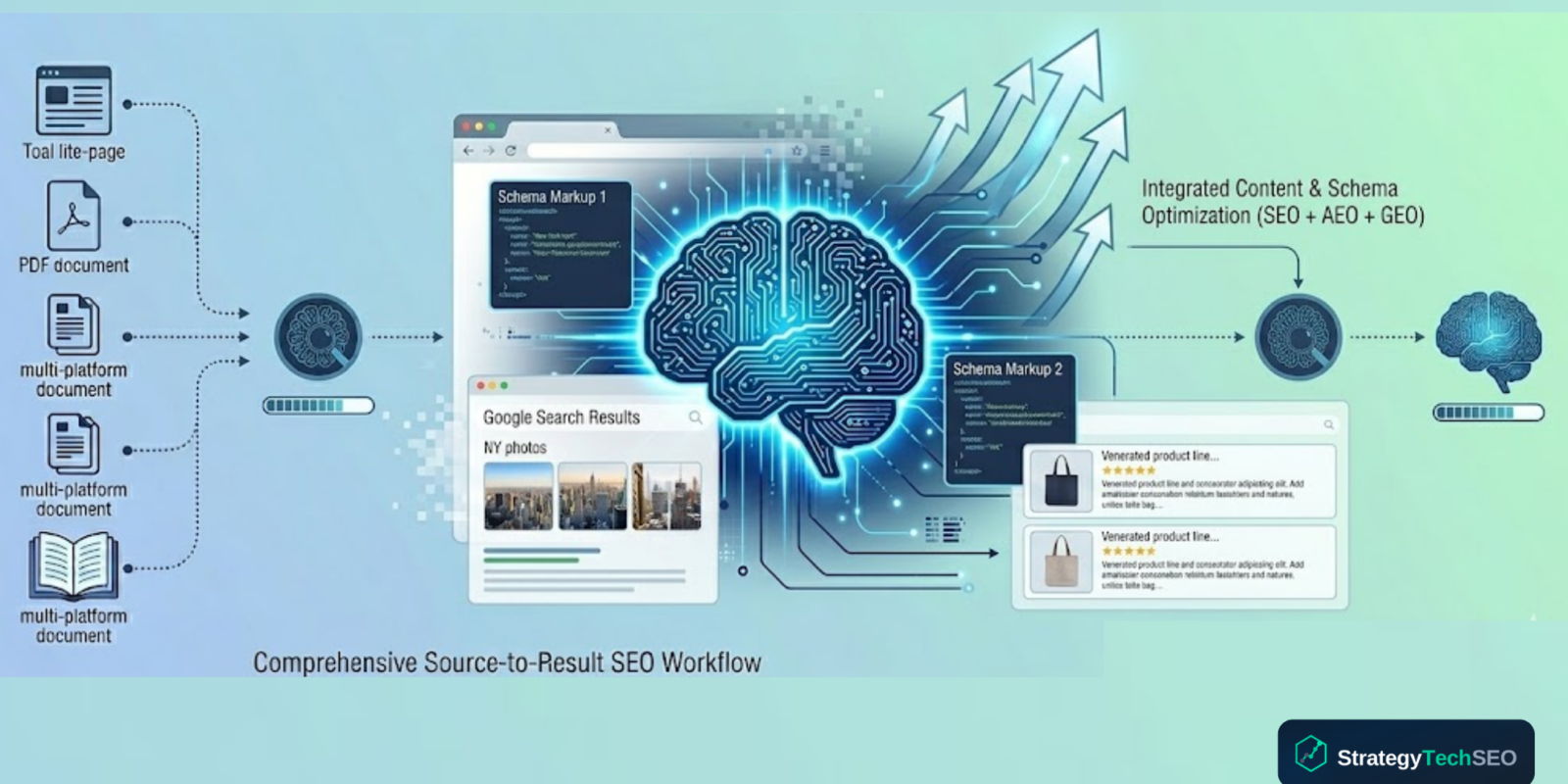
Getting cited in an AI Overview is the new featured snippets play, but with higher stakes and rewards. The pages that earn citations share several structural traits. They use clear heading hierarchies that logically map the content. They provide direct, concise answers in the first two to three sentences under each heading. They use schema markup to help search engines understand the content type and structure. And they come from domains with strong authority signals from external sources.
Good SEOs in 2026 are building content specifically designed to be extractable by AI models. That means writing in a question-and-answer format when appropriate, keeping answer blocks between 40 and 60 words, and ensuring each section can stand on its own as a self-contained response to a specific query.
Clear Heading Hierarchy
Use H2s and H3s that describe the content beneath them. AI models use headings to map your page and locate relevant answer blocks.
Concise Answer Blocks
Place a direct 40-60 word answer in the first two to three sentences under each heading. This is the range AI systems extract most reliably.
Schema Markup
Use Article, FAQ, and HowTo schema to give search engines a machine-readable map of your content structure and type.
External Authority Signals
Build citations from industry publications, directories, and communities. AI models weigh external validation heavily when selecting sources.
Shift Investment Toward Commercial and Transactional Content
AI Overviews hit informational queries hardest. Commercial and transactional queries remain far less affected because users searching with buying intent want to compare options, read reviews, and evaluate specific products. The AI Overview cannot effectively replace that experience.
This is where SEO strategies need to shift budget and attention. Comparison pages, product reviews, buying guides, and service pages continue to drive traffic at rates that informational content no longer can. These pages also convert at higher rates, making them more valuable per visit than the high-volume informational terms that AI Overviews have disrupted.
Build Authority That AI Systems Recognize
The brands earning AI Overview citations have authority signals that extend well beyond their own websites. They are mentioned in industry publications. They contribute to respected forums and communities. They produce original research that other sites cite. They have author profiles with demonstrated expertise in their subject matter.
This is the future-proof layer of any marketing strategy in the age of AI-driven search. Backlinks still matter, but the context of those backlinks matters more than ever. A mention in a respected industry publication carries significantly more weight with AI models than a hundred low-quality directory links. Focus on building the kind of authority that both humans and AI systems recognize as genuine.
AI training data updates periodically, and retrieval systems need time to discover and trust new sources. The brands earning AI citations today have been building authority for months or years. Start now so you are positioned when the next training cycle runs.
Key Takeaways for 2026 and Beyond
The AI overviews SEO impact is real, measurable, and accelerating. But the response should not be panic. It should be precise. The sites that adapt their SEO strategies to this new reality will not just survive the shift. They will benefit from it because the traffic they earn will be more qualified and more likely to convert.
Organic traffic from organic search is not disappearing. It is being redistributed. The redistribution favors sites with original perspectives, strong authority signals, clean content structure, and genuine expertise. Every one of those factors is within your control.
Run an audit on your top pages. Identify which ones are losing traffic to AI Overviews and which ones are earning citations. Double down on the content that earns citations. Rebuild or retire the content that AI can replace with a single paragraph. That is how you turn the impact of AI overviews from a threat into a competitive advantage.
Turn AI Overviews Into a Growth Channel
StrategyTech SEO helps you adapt to AI-powered search with content strategies built for citation, authority signals that AI models trust, and structural optimization that earns visibility at the top of every results page.
Sources & References
- Ahrefs. “Update: AI Overviews Reduce Clicks by 58%.” ahrefs.com
- Search Engine Land. “Google AI Overviews drive 61% drop in organic CTR, 68% in paid.” searchengineland.com
- Seer Interactive. “AIO Impact on Google CTR: September 2025 Update.” seerinteractive.com
- Digital Applied. “Google AI Overviews Surge 58%: SEO Impact Analysis.” digitalapplied.com
- WordStream. “AI Overviews Impact on SEO.” wordstream.com
- SEO.com. “How Does AI Overviews Affect SEO?” seo.com
- seoClarity. “AI Overviews Impact Research.” seoclarity.net
- ALM Corp. “AI Overviews and Zero-Click Searches: Adapting Your SEO Strategy for 2026.” almcorp.com

StrategyTech SEO
StrategyTech SEO helps businesses grow organic visibility through technical audits, on-page optimization, and data-driven search strategies. We turn SEO from guesswork into measurable results.