How to Do Keyword Research in 2026: The Intent-First Approach
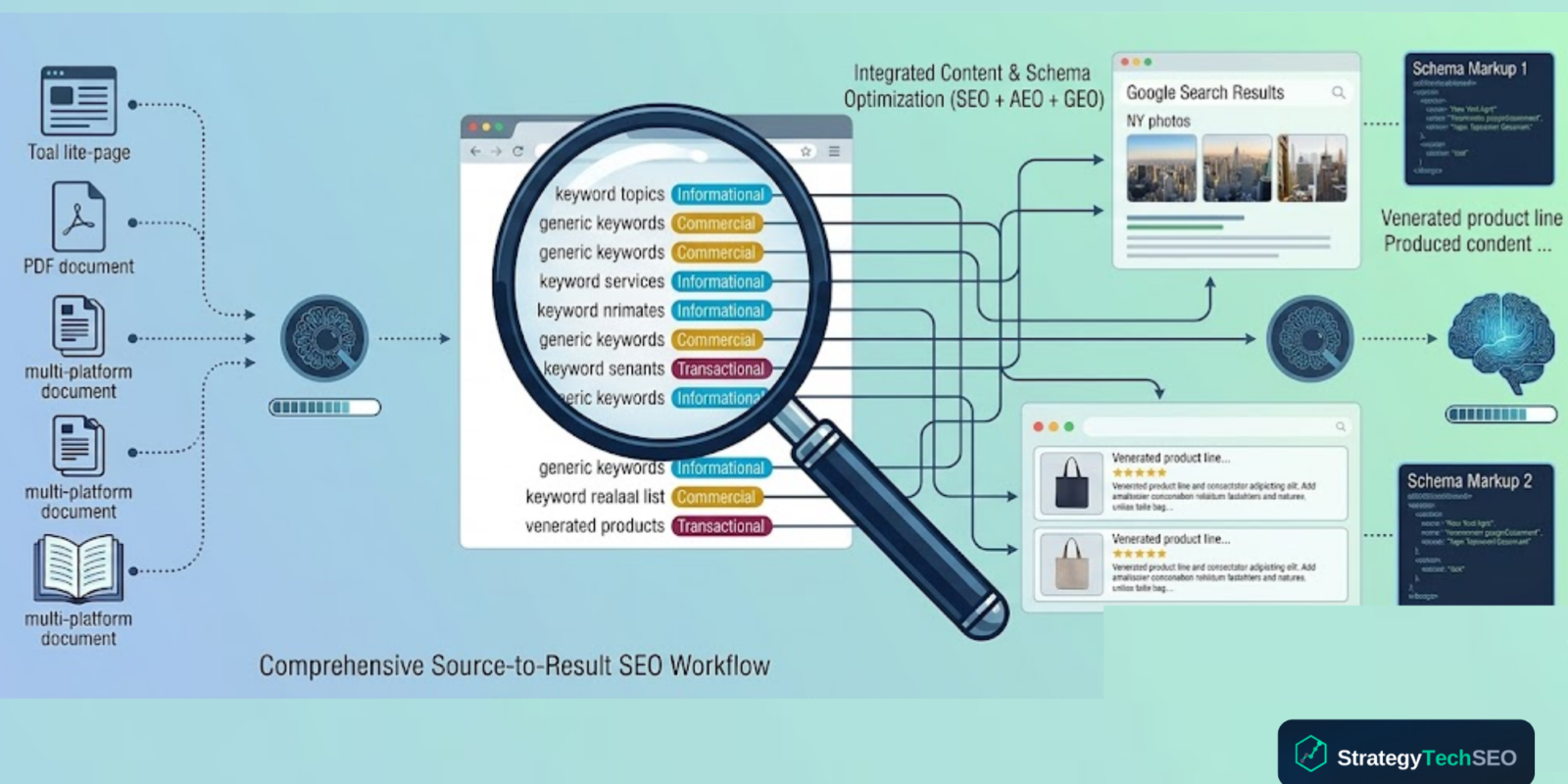
Learning how to do keyword research is still the foundation of every successful SEO strategy. But the process has changed. In 2026, finding a list of keywords with decent keyword search volume is only half the job. The other half is understanding what people search for when they type those words, classifying the intent behind every query, and mapping each keyword to the platform where it will actually perform. A keyword research tool can give you the data. It cannot tell you what to do with it.
Most guides stop at the tool. They show you how to plug a seed term into Google Keyword Planner, pull a list of keyword ideas, filter by difficulty score, and pick the ones that look promising. That workflow still matters. But it is no longer enough. Search engines have gotten better at understanding intent, AI-powered platforms now answer queries directly, and users split their attention across Google, ChatGPT, YouTube, and social search. A keyword that looks perfect on paper can deliver zero results if you publish the wrong type of content on the wrong platform.
This guide walks you through the complete process. You will learn how to find keywords, classify their intent, map them to the right platform, and build a strategy that produces results across every surface where your target audience searches.
Step 1: Start With Seed Keywords That Reflect Your Business
Every keyword research process starts with seed keywords. These are the broad terms that describe your product or service, your industry, and the problems your audience is trying to solve. You are not looking for perfect keywords at this stage. You are building a starting point that the tools will expand into hundreds or thousands of variations.
Think about the core categories of your business. If you run an SEO agency, your seeds might include SEO services, keyword research, link building, technical SEO, and content strategy. If you sell software, your seeds might be the product category, the problem it solves, and the alternatives your prospects are comparing. Write down 10 to 15 seed terms that cover the full scope of what your business does and what your audience needs.
The best seeds come from three places: your own expertise in the industry, the language your customers use when they describe their problems, and the topics your competitors already rank for. Do not overthink this step. The tools will do the heavy lifting in the next phase.
Your own industry expertise, the language your customers use to describe their problems, and the topics your competitors already rank for. Write down 10 to 15 terms that cover the full scope of your business and audience needs.
Step 2: Use Keyword Research Tools to Expand Your List
Once you have your seeds, it is time to run them through a keyword research tool to generate keyword ideas at scale. The goal is to build a broad list of keywords that you will filter and prioritize in later steps.
Google Keyword Planner
Google Keyword Planner is the most accessible free keyword research tool available. You need a Google Ads account to access it, but you do not need to run ads. Enter your seed terms and the planner will return related keywords along with keyword search volume ranges, competition levels, and bid estimates. The free tier shows volume ranges rather than exact numbers, but those ranges are enough for filtering and relative prioritization.
To access Keyword Planner, log into your Google Ads account, click the Tools icon, select Planning from the menu, then choose Keyword Planner. Use the “Discover new keywords” option to enter your seeds. You can also add your website URL so the tool filters out keywords that are unrelated to what you offer.
Other Tools Worth Using
Beyond Google Keyword Planner, several other search tools round out the process. Ahrefs and Semrush are the most comprehensive paid options. They provide exact volume estimates, difficulty score rankings, click-through rate data, and SERP analysis for every specific keyword. For teams on a budget, free keyword research tools like Ubersuggest, AnswerThePublic, and Google Search Console give you enough data to build a solid keyword list without a paid subscription.
AnswerThePublic is especially useful for uncovering question-based search queries that your audience is asking. These long-tail queries often have lower competition and higher conversion rates because they reflect a specific need rather than a broad topic.
Google Keyword Planner
Free with a Google Ads account. Best for volume ranges, competition levels, and bid estimates. Use “Discover new keywords” to expand your seed list at scale.
Ahrefs & Semrush
Comprehensive paid tools with exact volume, difficulty scores, CTR data, and full SERP analysis. The most complete options for professional keyword research.
AnswerThePublic
Surfaces question-based search queries your audience is asking. Ideal for long-tail discovery with lower competition and higher conversion potential.
Google Search Console
Shows the actual search queries driving impressions and clicks to your site. A free tool that reveals keyword opportunities you are already close to winning.
What to Look For
At this stage, you are collecting data, not making final decisions. For every keyword, note the keyword search volume, the difficulty score, and the type of content that currently ranks for it. Do not filter too aggressively yet. You want a broad list because the intent classification step will reshape your priorities significantly.
Step 3: Classify Every Keyword by Search Intent
This is where most keyword research guides fail. They treat intent as a footnote instead of the core framework. In 2026, intent classification is not optional. It is the step that determines whether your content will rank, convert, or get ignored entirely.
Every search query falls into one of four intent categories.
| Intent Type | User Goal | Content Format | Examples |
|---|---|---|---|
| Informational | Learn something | Blog posts, guides, tutorials | “what is keyword research” “how to improve page speed” |
| Commercial Investigation | Compare options before deciding | Comparisons, reviews, evaluations | “best keyword research tools 2026” “Ahrefs vs Semrush” |
| Transactional | Take action (buy, sign up, download) | Product pages, pricing, landing pages | “buy Ahrefs subscription” “hire SEO agency” |
| Navigational | Find a specific website or page | Brand pages | “Ahrefs login” “Google Search Console” |
How to Classify Intent at Scale
For small keyword lists, you can classify intent manually by searching each term on Google and looking at the types of content that rank on the first page. If the search engine results pages show mostly blog posts and guides, the intent is informational. If they show product pages and pricing comparisons, the intent is transactional or commercial.
For larger lists, use a keyword search tool with built-in intent classification like Semrush or Keyword Insights. These tools use AI to classify intent automatically, which saves hours of manual work. But always spot-check the automated classifications against the actual search results. AI gets the baseline right, but nuanced queries often have mixed intent that requires human judgment.
Why This Step Changes Everything
A keyword with 10,000 monthly searches and informational intent needs a completely different piece of content than a keyword with 500 monthly searches and transactional intent. The second keyword will almost certainly generate more revenue despite the lower volume. Without intent classification, you end up building content that ranks but does not convert, or content that targets the wrong audience entirely.
Intent classification also prevents one of the most common mistakes in SEO: creating a blog post for a keyword that Google has already decided should return product pages. If the search engine results pages for your target term are dominated by ecommerce listings, publishing an article will not work, no matter how good the content is. The intent does not match.
Step 4: Map Keywords to the Right Platform
Here is the step that separates a 2026 keyword strategy from a 2020 one. People search on more platforms than ever before. Google is still dominant, but your target audience is also using ChatGPT, YouTube, TikTok, Reddit, and AI-powered answer engines to find information, compare products, and make decisions. A specific keyword might perform well as a blog post on Google, but the same topic might reach more of your audience as a YouTube video or a Reddit thread.
Google Search
Primary platform for most search queries, especially commercial and transactional intent. Optimize blog posts, product pages, and comparison guides here.
AI Search Platforms
ChatGPT, Perplexity, and Google AI Overviews pull answers from well-structured content. Use clear headings, concise answer blocks, and schema markup.
YouTube
“How to” keywords and step-by-step guides perform better as video. Google frequently shows YouTube results for process-oriented queries.
Reddit & Community Platforms
Long-tail queries with niche questions often surface Reddit threads. Community contributions can earn visibility that blog posts cannot.
The Mapping Framework
For every keyword on your list, assign a primary platform and a content format. An informational keyword about a complex process might map to a blog post on Google and a video on YouTube. A commercial keyword comparing two tools might map to a comparison page on your website and a structured answer optimized for AI search. This dual-mapping approach ensures you reach your target audience on the platform where they are actually looking.
Common Keyword Research Mistakes That Waste Your Time
Before moving to prioritization, it is worth flagging the mistakes that derail most keyword strategies. These are the patterns that lead to months of content production with minimal results.
- Chasing volume without checking intent. A keyword with 50,000 monthly searches means nothing if the intent does not match your content. Many teams spend months trying to rank for high-volume informational terms when their business needs transactional traffic. Always classify intent before committing resources.
- Ignoring the SERP before writing. The search engine results pages tell you exactly what Google expects for a given query. If the first page is dominated by product pages and you publish a blog post, you will not rank regardless of your content quality. Check the SERP format before you create a keyword target.
- Using one tool and calling it done. No single keyword research tool captures every relevant term. Google Keyword Planner is strong for volume data but weak on long-tail discovery. AnswerThePublic surfaces questions that volume-based search tools miss. Combining multiple tools gives you a complete picture that any single tool cannot provide on its own.
- Treating keyword research as a one-time event. Search queries shift over time. New competitors enter the market. AI platforms change which content formats earn visibility. A keyword list from six months ago may already be outdated. Build keyword research into your quarterly workflow, not just your launch calendar.
- Targeting keywords your site cannot realistically win. A new website with limited authority should not compete for keywords with a difficulty score of 80+. Start with lower-difficulty, long-tail terms where you can earn rankings quickly, then work your way up as your domain authority grows.
Step 5: Prioritize and Build Your Keyword Strategy
Now that you have a classified, mapped keyword list, it is time to prioritize. Not every keyword deserves a piece of content. The goal is to focus your resources on the keywords that will deliver the most value for your business.
The Prioritization Framework
Score each keyword across four dimensions.
Business relevance. How closely does this keyword relate to your product or service? A keyword with high volume but no connection to what you sell is a vanity metric. Prioritize keywords where ranking directly supports a business goal.
Search volume. Higher keyword search volume means more potential traffic, but volume alone is misleading. A low-volume keyword with transactional intent and low difficulty will often outperform a high-volume keyword with informational intent and high competition.
Difficulty. The difficulty score tells you how hard it will be to rank. New sites should focus on lower difficulty keywords where they can realistically earn a first-page position. Established sites can target more competitive terms.
Intent alignment. Does the intent of this keyword match the type of content you can realistically produce? If a keyword requires a comprehensive comparison guide and you do not have the data or expertise to build one, deprioritize it until you do.
Create a Keyword Map
Once you have scored and prioritized, organize your keywords into a content map. Group related keywords into clusters. Assign each cluster a primary page and supporting content. Make sure every page on your site targets a distinct keyword cluster so you are not competing with yourself across multiple pages.
This keyword map becomes your editorial calendar. It tells you what to write, what format to use, which platform to publish on, and what intent to satisfy. Without it, keyword research is just a data exercise with no strategic output.
Group related keywords into clusters. Assign each cluster a primary page and supporting content. This map becomes your editorial calendar telling you what to write, what format to use, which platform to publish on, and what intent to satisfy.
Step 6: Track, Measure, and Adjust
Keyword research is not a one-time task. Search queries evolve. New competitors enter your space. AI-powered platforms reshape which content formats earn visibility. Set a schedule to revisit your keyword strategy at least quarterly.
Use Google Search Console to monitor which keywords are actually driving impressions and clicks to your site. Compare your target keywords against the search queries that Google is matching to your pages. If there is a mismatch, your content may need restructuring to better align with the intent Google associates with those terms.
Track your rankings for priority keywords, but do not obsess over position alone. In 2026, visibility means more than ranking number one on Google. It means appearing in AI Overviews, earning featured snippets, showing up in YouTube results, and being cited by AI answer engines. Your measurement framework needs to account for all of these surfaces.
The Tools Are Only Half the Job
Every keyword research tool on the market can give you a list of terms with volume and difficulty data. That is the easy part. The hard part, and the part that actually determines whether your strategy works, is classifying intent correctly, mapping keywords to the platforms where your target audience is searching, and building content that matches what both humans and search engines expect to find.
How to do keyword research in 2026 is not just about finding words. It is about understanding why people search for those words, where they search, and what they expect to find when they get there. The brands that treat keyword research as a strategic framework rather than a data pull will build the kind of visibility that compounds across every search surface.
Build a Keyword Strategy That Actually Performs
StrategyTech SEO helps you move beyond keyword lists to intent-driven strategies that map every term to the right platform, the right content format, and the right business outcome.
Sources & References
- Ahrefs. “Keyword Research: The Beginner’s Guide by Ahrefs.” ahrefs.com
- HubSpot. “How to Do Keyword Research for SEO: A Beginner’s Guide.” hubspot.com
- TopicalMap.ai. “Search Intent Classification Methods: A Complete Guide for 2026.” topicalmap.ai
- TopicalMap.ai. “Search Intent Mapping for Clusters: The 2026 Guide.” topicalmap.ai
- Digital Applied. “AI-Powered Keyword Research: Complete Guide 2026.” digitalapplied.com
- Whitehat SEO. “Keyword Research in 2026: The Complete B2B Guide.” whitehat-seo.co.uk
- SEO.com. “How to Use Google Keyword Planner for SEO in 2026.” seo.com
- Iowa State University. “The Basics of Keyword Research.” iastate.edu

StrategyTech SEO
StrategyTech SEO helps businesses grow organic visibility through technical audits, on-page optimization, and data-driven search strategies. We turn SEO from guesswork into measurable results.